
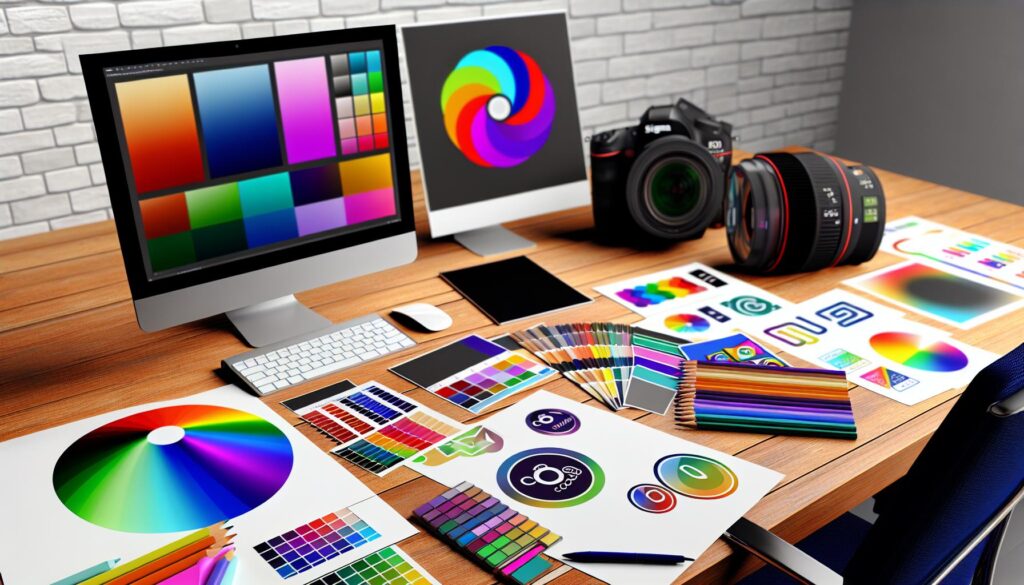
The psychology of color in marketing studies how colors affect consumers' perception, emotions, and decisions. Understanding these influences is essential for creating effective campaigns, strengthening brand identity, and increasing sales. In this article, we explore the fundamentals, applications, and impacts of color in the context of modern marketing.
Fundamentals of color psychology
The psychology of color In marketing, this is a fundamental area for understanding how colors affect consumers' emotions, perceptions, and behaviors. Based on... color theory, This discipline investigates how different shades can evoke specific psychological responses that influence purchasing decisions and brand perception.
A color theory Color theory is a set of principles that explains how colors interact with each other and how they are visually perceived. The primary colors (red, blue, and yellow) are the basis for the creation of other secondary and tertiary colors, and each of them has distinct psychological associations. Furthermore, colors can be divided into... hot e cold, where warm colors (red, orange, yellow) tend to evoke feelings of energy and excitement, while cool colors (blue, green, violet) convey calm and serenity.
From a psychological point of view, colors carry meanings that can be universal or culturally specific. For example, the red It is often associated with passion, action, and urgency, stimulating appetite and attracting attention, and is widely used in promotional campaigns. As for... blue It symbolizes trust, security, and professionalism, which is why it's a common choice for financial and technology institutions. However, it's essential to recognize that these meanings are not static and can vary according to the cultural and individual context of the target audience.
Below is a table summarizing the most common colors in marketing, their psychological meanings, and their practical applications:
| Color | Psychological Meaning | Applications in Marketing |
|---|---|---|
| Red | Energy, passion, urgency, action | Promotions, alerts, food, retail |
| Blue | Trust, security, calmness, professionalism | Banks, technology, health, social networks |
| Yellow | Optimism, joy, attentiveness | Limited-time promotions, signage, children's products |
| Green | Nature, health, tranquility, balance | Eco-friendly products, health, natural foods |
| Black | Sophistication, luxury, power, mystery | Fashion, automobiles, premium technology |
| White | Purity, simplicity, cleanliness | Health, technology, minimalist packaging |
| Orange | Enthusiasm, creativity, excitement | Call to action, food, entertainment |
Beyond individual meanings, the perception of colors is profoundly influenced by cultural context. For example, while the white While it symbolizes purity and marriage in Western cultures, in many Asian cultures it is associated with mourning and death. This variation makes a detailed study of the target audience essential to avoid misinterpretations that could compromise the message being conveyed.
Another crucial aspect is the context of color use. The same color can generate different responses depending on the environment, combination with other colors, hue, brightness, and saturation. For example, a vibrant red in promotional materials can incite urgency and action, but a dark red can evoke a sense of luxury and sophistication, as seen in premium brands.
Scientific research demonstrates that color impacts how long a consumer stays in an environment, perceived brand trust, and even willingness to pay more for a particular product. Studies such as those published in the journal Journal of Business Research Studies confirm that color choices aligned with brand values and target audiences significantly boost engagement and sales.
For further information, we recommend reading the following reliable resources:
- The influence of color on consumer behavior: a comprehensive review (ScienceDirect)
- Color psychology: effects of perceiving color on psychological functioning in humans (NCBI)
- The psychology of color in marketing and branding (American Psychological Association)
Practical applications of color in marketing.
The psychology of color in marketing. Color plays a fundamental role in creating emotional connections between a brand and a consumer, influencing purchasing decisions and the public's overall perception of a product or service. Colors are strategically applied across various marketing fronts, from logo design to the layout of commercial spaces, with the goal of attracting attention, communicating values, and stimulating specific behaviors.
O logo design Color is one of the areas most impacted by color psychology. A logo needs to be memorable, convey the essence of the brand, and evoke a quick and positive association. For example, the red used by Coca-Cola not only attracts attention but also stimulates feelings of energy and excitement, while Facebook's blue conveys trust and security. The choice of logo color should be aligned with the emotional message the brand wants to establish with its audience, ensuring clarity and visual coherence.
To the packaging Packaging is another area where colors have a strong influence on consumer behavior. They not only make the product stand out on the shelves, but also create sensory experiences that can persuade a purchase. Studies indicate that up to 90% of the decision to buy a product can be based solely on the color of the packaging. A prime example is Apple, which uses minimalist and neutral colors in its packaging to reinforce an image of sophistication and innovation. Meanwhile, brands of children's products frequently opt for vibrant colors, such as yellow and orange, to stimulate feelings of joy and security.
In advertising, the strategic use of color helps create more impactful and persuasive messages. Campaigns that opt for specific palettes can guide the consumer's attention and influence their mood and purchase intent. For example, food advertisements use warm tones like red and yellow, which are associated with appetite and taste, while luxury product campaigns tend to use black and gold to evoke exclusivity and elegance.
O commercial space design It also leverages color psychology to enhance the customer experience within the store, influencing dwell time and purchasing behavior. Green, for example, is widely used in natural product stores to convey freshness and tranquility, while yellow can be used in environments that aim to stimulate communication and interaction. Furthermore, the harmony of colors in the environment should facilitate navigation and highlight specific products, creating a visual journey that promotes conversion.
Case studies exemplify the effective application of color in marketing. Starbucks uses earthy and green tones to strengthen its sustainable and welcoming image, promoting an environment where consumers feel comfortable staying longer. IKEA, on the other hand, opts for a combination of blue and yellow—the colors of the Swedish flag—reinforcing its brand identity and trustworthiness, while also conveying energy and accessibility.
Practical tips for using color in marketing:
- Get to know your target audience: Color preferences vary across age groups, genders, and cultures. Research to ensure that the colors chosen are appealing and appropriate for your target audience.
- Maintain visual consistency: Colors should be applied uniformly across all elements of visual communication, strengthening brand recognition.
- Evaluate the context of use: Colors can have different interpretations depending on the medium (digital, print, physical) and the environment in which the brand is placed.
- Use colors to organize information hierarchically: In advertising and layout, contrasting colors help to highlight relevant offers, calls to action, or products.
- Test and optimize: Conduct A/B testing with color variations to understand which ones generate more engagement and conversions.
- Avoid excesses: A balanced color palette avoids visual clutter and conveys professionalism.
It's worth emphasizing that visual consistency is the foundation for maximizing the positive effects of color psychology. Brands that maintain a cohesive palette in their visual identity tend to generate greater trust and familiarity, essential elements for a lasting relationship with the consumer.
The impact of colors on consumer behavior.
The psychology of color in marketing. It is a field grounded in scientific evidence demonstrating how colors profoundly influence consumer behavior, emotions, and purchasing decisions. Numerous experimental and neuroscience studies confirm that colors are not merely aesthetic variables, but powerful agents that directly affect cognitive and affective processes, modulating perceptions and psychological reactions that impact engagement with products and brands.
Research indicates that colors activate specific areas of the brain linked to emotion, memory, and motivation. For example, the amygdala, a central structure in emotional processing, responds differently to varying shades, influencing states such as excitement, calm, or alertness. This explains why red is associated with urgency and the stimulation of action, while blue tends to convey tranquility and confidence.
A classic study conducted by Labrecque and Milne (2013) revealed that 90% of first impressions of products are exclusively related to color, reinforcing its crucial role in creating perceived value. The table below summarizes the main psychological effects that colors have on consumers:
| Color | Emotions and Perceptions | Impact on Buying Behavior |
|---|---|---|
| Red | Attention, urgency, excitement | It encourages impulse buying and increases the feeling of urgency. |
| Blue | Trust, security, calm | It fosters brand loyalty and a perception of quality. |
| Yellow | Optimism, happiness, alert | It increases visual engagement, ideal for grabbing attention. |
| Green | Balance, health, nature | It associates products with well-being and sustainability. |
| Black | Luxury, sophistication, power | Used in premium brands to reinforce exclusivity. |
| Purple | Creativity, mystery, spirituality | It stimulates the imagination and connection to innovative products. |
These effects are also explained by the concept of symbolic association, in which the brain connects colors to pre-existing experiences and meanings, building expectations and emotions even before direct interaction with the product or service.
Graphical evidence of this phenomenon can be illustrated by the increase in click-through rate (CTR) in ads as shown by the color changes below:
| Color of the Advertisement | Average Click-Through Rate (CTR) |
|---|---|
| Red | 7,1% |
| Blue | 5,4% |
| Green | 6,0% |
| Yellow | 4,8% |
Beyond the basic effects, it is crucial to consider individual variations in response to colors, based on demographic factors such as gender, age, and culture. Studies show that, for example, women tend to prefer softer colors like blue, green, and purple, while men generally lean towards more intense colors like red, dark blue, and black. Therefore, campaigns targeting their audience can adjust the color palette to maximize identification and appeal.
Regarding age range, children show a greater preference for vibrant and primary colors, as these stimulate learning and curiosity, while adults and the elderly prefer more neutral and pastel tones, which convey comfort and familiarity. This distinction emerges from perceptual and emotional processes that evolve with age and cognitive maturity.
Cultural influence is also a determining factor. A comparative study conducted between Western and Asian consumers showed notable variations, such as red being seen as a sign of luck and prosperity in China, but potentially suggesting warning and danger in certain Western contexts. Green, often associated with nature and health in the West, can symbolize uncertainty or even mourning in some Middle Eastern countries. Therefore, a deep cultural understanding is essential to avoid misunderstandings and maximize the relevance of visual communication.
Therefore, the psychology of color in marketing not only ignores the subjectivity of human experience, but uses it as a tool to build visually coherent and effective messages that engage with the emotional and cognitive aspects of the consumer. Mastering these nuances is essential for creating visual strategies that truly influence decision-making patterns and strengthen brand positioning in the market.
Trends and the future of color psychology in digital marketing.
With the rapid evolution of digital marketing, the use of color in the virtual environment has undergone significant transformations, driven by emerging technologies and increasingly sophisticated customization features. Today, brands not only choose a color palette based on traditional theories of color psychology, but also base their decisions on... big data and artificial intelligence (AI), which allows adjusting the shades in real time to maximize engagement and conversion.
One of the most striking trends is the radical personalization of colors in digital campaigns. Through behavioral analysis and user browsing history, systems can identify which colors have greater individual appeal. For example, an algorithm can distinguish that, for a certain audience, warm tones like red and orange elicit more attention and emotional response, while for another group, blue and green convey more credibility. This customization goes beyond simple aesthetic choice, directly impacting the effectiveness of communication, reinforcing brand identity, and facilitating consumer decision-making.
Another crucial advancement is the incorporation of augmented reality (AR). On AR platforms, colors not only decorate but also interact with the user's environment, promoting immersive and sensory experiences. For example, viewing a product through an app allows the consumer to perceive nuances and color combinations under different lighting and real-world contexts, reducing purchase uncertainty and increasing post-purchase satisfaction. In these environments, the use of color must consider technical aspects of rendering, contrast, and accessibility, ensuring that the shades maintain their psychological intent even in dynamic scenarios.
Artificial intelligence, combined with machine learning, is also revolutionizing color management. Advanced tools analyze large volumes of data to identify engagement patterns related to color choices across different digital channels, such as websites, social media, and mobile applications. These systems suggest optimizations, from subtle adjustments to the tone of a call-to-action button to more strategic changes in the overall palette, based on performance indicators. The result is more agile and user-centric marketing, capable of adapting to constantly changing conditions and preferences.
However, these innovations present challenges. The constant customization of colors can make it difficult to maintain a consistent visual brand identity, a factor essential for recognition and building trust. Furthermore, excessive reliance on data can obscure qualitative experiences, which require aesthetic sensitivity and cultural knowledge beyond the numbers. Digital marketing professionals therefore need to balance data analysis with creative expertise so that colors convey not only mathematical results, but also symbolic values and emotional differentiators.
To strategically apply colors in various digital environments, some practical suggestions stand out:
- Websites: Utilize effective contrasts to ensure accessibility, while maintaining colors that reinforce the brand tone, and implement A/B testing to evaluate the impact of color changes on the conversion rate.
- Social media: Take advantage of the agility to vary color palettes in posts and ads according to the segmented profile of the audience, using colors that evoke specific emotions aligned with the message of each campaign.
- Applications: Prioritize adapting colors according to the operating system and mode (light or dark), and explore colorful micro-interactions to reinforce feedback and encourage user action.
Therefore, mastering the psychology of color in digital marketing today requires a deep integration of technology, data analysis, and aesthetic sensitivity, providing engaging experiences that directly resonate with the expectations and feelings of each consumer in a constantly evolving landscape.
Conclusion
The psychology of color in marketing is a powerful tool for influencing consumer emotions and decisions, maximizing results. When used strategically, it helps build strong identities and increase the effectiveness of campaigns. To fully explore these benefits, rely on specialized professionals. Contact Thigor Agency to boost your brand with advanced marketing strategies.


 Portuguese
  Italian
  English