

The evolution of marketing mirrors social, technological, and economic changes. From ancient strategies to contemporary digital marketing, understanding this history is fundamental to leveraging best practices and trends. This article explores the main milestones and transformations of marketing over time.
Origins and Principles of Traditional Marketing
From its earliest days, the evolution of marketing has been intrinsically linked to the economic and technological transformations of society. At the beginning of the 20th century, marketing was essentially focused on production and sales, reflecting an era in which the priority was to manufacture goods on a large scale and persuade consumers to purchase them. This approach became known as product and sales orientation, where commercial success depended on the company's ability to manufacture, distribute, and drive sales.
The first concepts of traditional marketing were organized around the "4 Ps": Product, Price, Place (distribution), and Promotion. These elements formed the basis for the development of business strategies. Product referred to the goods or services offered, emphasizing features and quality; Price sought to balance competitiveness and profit margin; Place defined the channels and points of sale; and Promotion involved efforts to communicate with and persuade the consumer. This structure helped companies segment their market more objectively, although still within a fairly restricted spectrum regarding personalization and a deep understanding of consumer behavior.
In this context, advertising and branding played decisive roles in the first decades of the 20th century. Advertising, especially through mass media such as radio, television, and print (newspapers, magazines, and billboards), became the main vehicle for reaching a vast audience simultaneously. Messages were created to stimulate the desire and need for consumption in a broad and less segmented way, using emotional appeals and memorable slogans to fix brands in the collective imagination.
Branding, in turn, began to structure itself as a tool for building the identity of companies and their products, generating loyalty and differentiating offerings in increasingly competitive markets. Brands like Coca-Cola and Ford are emblematic examples of the consolidation of branding in this phase, targeting broad audiences and consolidating the concept of intangible value associated with brands.
The importance of mass marketing was therefore undeniable during this period. Large advertising campaigns, mainly broadcast in newspapers, magazines, radio and, later, television, allowed companies to impact millions of consumers with a single effort, strengthening brand image and boosting sales. This uniformity of communication reflected the very logic of the mass production industry, which aimed to meet the generic needs of the average consumer.
To better understand the transformations that have occurred from those early days to more contemporary practices, the following table compares key points between traditional marketing and modern marketing:
Comparative table: Traditional Marketing vs. Modern Marketing
- Focus: Traditional – Product and sales; Modern – Customer and experience.
- Segmentation: Traditional – Broadly general, mass marketing; Modern – Highly segmented and personalized.
- Communication channels: Traditional – Mass media (TV, radio, print); Modern – Digital, social media, direct marketing.
- Interaction: Traditional – One-way communication; Modern – Two-way communication, engagement.
- Objective: Traditional – Immediate sale; Modern – Building relationships and loyalty.
- Measurement: Traditional – Difficult to measure precisely; Modern – Real-time data, detailed analysis.
- Branding strategies: Traditional – Creating a brand for recognition; Modern – Continuously building brand value and purpose.
This development reflects the maturation of marketing as a discipline and business practice, keeping pace with the increasing complexity of markets and consumer expectations, and prepares the ground for the transformations that would be intensified with the digital revolution and the emergence of new forms of communication and relationship.
The Impact of Technology and the Emergence of Digital Marketing
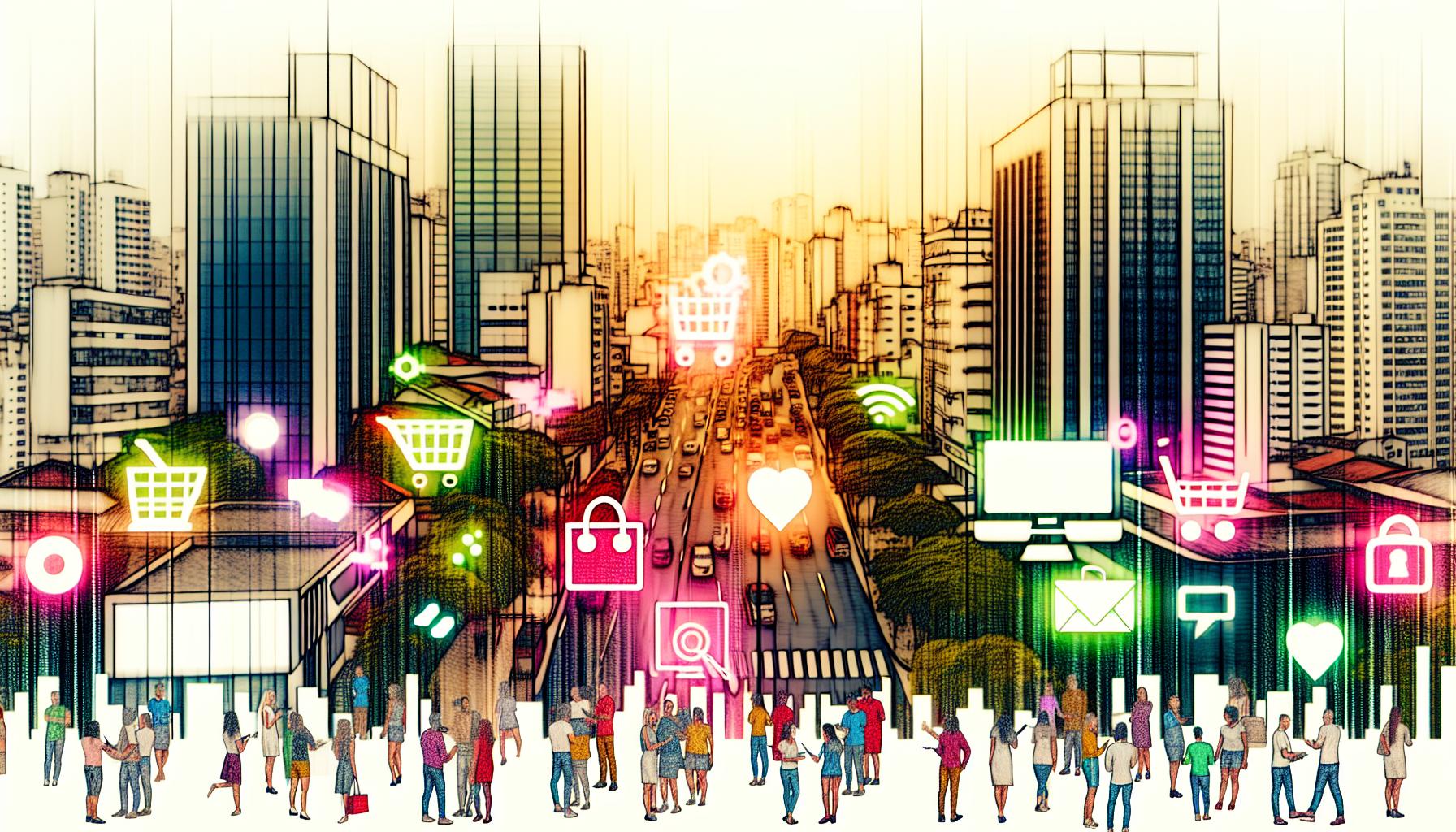
The revolution brought about by the internet and digital technologies has profoundly transformed marketing, creating a completely new landscape for businesses and consumers. Digitization has paved the way for the development of tools that enable not only more direct and efficient communication, but also real-time monitoring of the results of adopted strategies, promoting a progressive evolution from mass marketing to highly personalized and interactive marketing.
Among the main innovations that have emerged with digitalization, the following stand out: email marketing, which allows for the segmented sending of messages with relevant offers and content directly to the target audience; the SEO (Search Engine Optimization), fundamental for improving the organic visibility of websites in search engines like Google, ensuring greater reach without direct media costs; social networks, which present a direct channel for engagement, dialogue, and building communities around brands; the e-commerce, a sector that enabled online sales, eliminating geographical barriers and facilitating the buying and selling process; and the use of analytics, which transforms data into valuable insights for the continuous optimization of marketing actions.
These new tools have enabled the transition from a model centered on one-way, mass communication to an interactive, consumer-centric format, where each individual can be approached with personalized messages based on their behavior, preferences, and purchase history. Digital marketing has introduced concepts of dynamic segmentation and automation, making campaigns more efficient and assertive, increasing conversion rates and customer satisfaction.
To illustrate the differences between digital and traditional marketing, the following points stand out:
- Communication:
Traditional: unidirectional and limited to channels such as TV, radio and print media.
Digital: bidirectional and real-time, with the possibility of dialogue and immediate feedback.
– Segmentation:
Traditional: Broad segmentation based on demographic data and specific surveys.
Digital: Precise segmentation based on online behavior, interests, and interaction history.
Measurement:
Traditional: Difficult to measure and evaluate results, with approximate metrics.
Digital: Detailed, instant metrics that allow for quick adjustments and optimized campaigns.
- Cost:
Traditional: Significant investments are required for production and broadcasting.
Digital: Budgetary flexibility, allowing for low-cost, large-scale campaigns.
– Reach and Scalability:
Traditional: limited geographically and by physical media space.
Digital: Global reach with potential for viral spread and organic growth.
The advantages of digital marketing are evident for both businesses and consumers. For businesses, there is greater efficiency in the use of resources, better knowledge of the target audience, increased agility in decision-making, and a higher return on investment (ROI). For consumers, the experience is enriched with relevant offers and content, greater freedom of choice, ease of interaction with brands, and access to detailed information that assists in decision-making.
Thus, the internet and digital technologies have not only created new tools and channels, but have also enabled a paradigm shift. Marketing has ceased to be a static and standardized process, becoming a dynamic, data-driven, customer-centric discipline capable of rapidly adapting to changes in the market and consumer behavior. This evolution is fundamental to understanding current strategies and preparing for future marketing trends.
Contemporary Strategies and Content Marketing
Contemporary marketing has increasingly consolidated itself around strategies oriented towards content marketing, inbound marketing, and an enhanced focus on customer experience. Unlike traditional approaches, which prioritized the simple exposure of products or services, today's brands seek to build deep and lasting relationships through the continuous delivery of relevant and personalized value.
Content marketing consists of the strategic creation and distribution of materials that inform, entertain, or educate the target audience, with the main objective of generating genuine interest and establishing brand authority within its niche. This approach creates a virtuous cycle where the consumer is not merely a passive recipient of the message, but an active participant who consumes, shares, and interacts with the content, promoting engagement and trust.
Within this scenario, inbound marketing emerges as a complementary methodology, aiming to attract the right audience through useful content aligned with their needs and interests, naturally drawing them into the sales funnel. Instead of interrupting the consumer with invasive advertising, inbound marketing generates connections through blogs, videos, ebooks, webinars, and other forms of content that create a progressive relationship.
Focusing on customer experience (CX) has become an essential competitive differentiator. Brands that invest in mapping the customer journey seek to offer consistent, personalized, and memorable interactions at all touchpoints. This positive experience increases loyalty and encourages word-of-mouth marketing, especially in an era where digital reputation is widespread.
Storytelling is a fundamental component that permeates these strategies. Telling stories that reflect the values, challenges, and aspirations of the audience makes communication more human and emotional, facilitating identification and an affective connection between consumer and brand. The effective use of storytelling transforms simple messages into narratives that motivate actions and strengthen the brand's market positioning.
Influencer marketing strategies have gained increasing prominence as they leverage the credibility and reach of individuals who already enjoy the trust of the target audience. Strategically selected influencers help amplify the brand's message, making it more authentic and impactful on digital platforms, especially social media.
Another crucial advancement lies in marketing automation, which uses software to automate repetitive processes and personalize communication at scale. Automation systems enable everything from sending segmented emails to monitoring consumer behavior, optimizing resources and maximizing results with less manual effort.
Below is a table outlining some of the most common tools in content marketing and their benefits:
Tool | Benefits
——————————|————————————————————-
HubSpot | Complete platform for automation, CRM, and content management
WordPress | Flexibility in creating and managing optimized blogs and websites
Canva | Quickly create attractive and personalized visual materials
Google Analytics | Detailed monitoring of audience behavior and content performance.
Hootsuite | Integrated management of multiple social media networks and post scheduling
Mailchimp | Automation and segmentation for email marketing campaigns
These tools enable a more effective connection with the audience, greater operational efficiency, and accurate analysis of return on investment.
To deepen your knowledge of content marketing, inbound marketing, storytelling, and automation, it is recommended to explore reliable resources such as the HubSpot blog (https://blog.hubspot.com/), the Content Marketing Institute guides (https://contentmarketinginstitute.com/), and the Google Digital Garage (https://learndigital.withgoogle.com/digitalgarage).
Thus, by integrating valuable content, authentic relationships, and intelligent technology, marketing evolves into an ecosystem where the consumer is at the center and constant dialogue is the path to success in an increasingly competitive and dynamic market.
The Future of Marketing and Emerging Trends
Evolution of Marketing
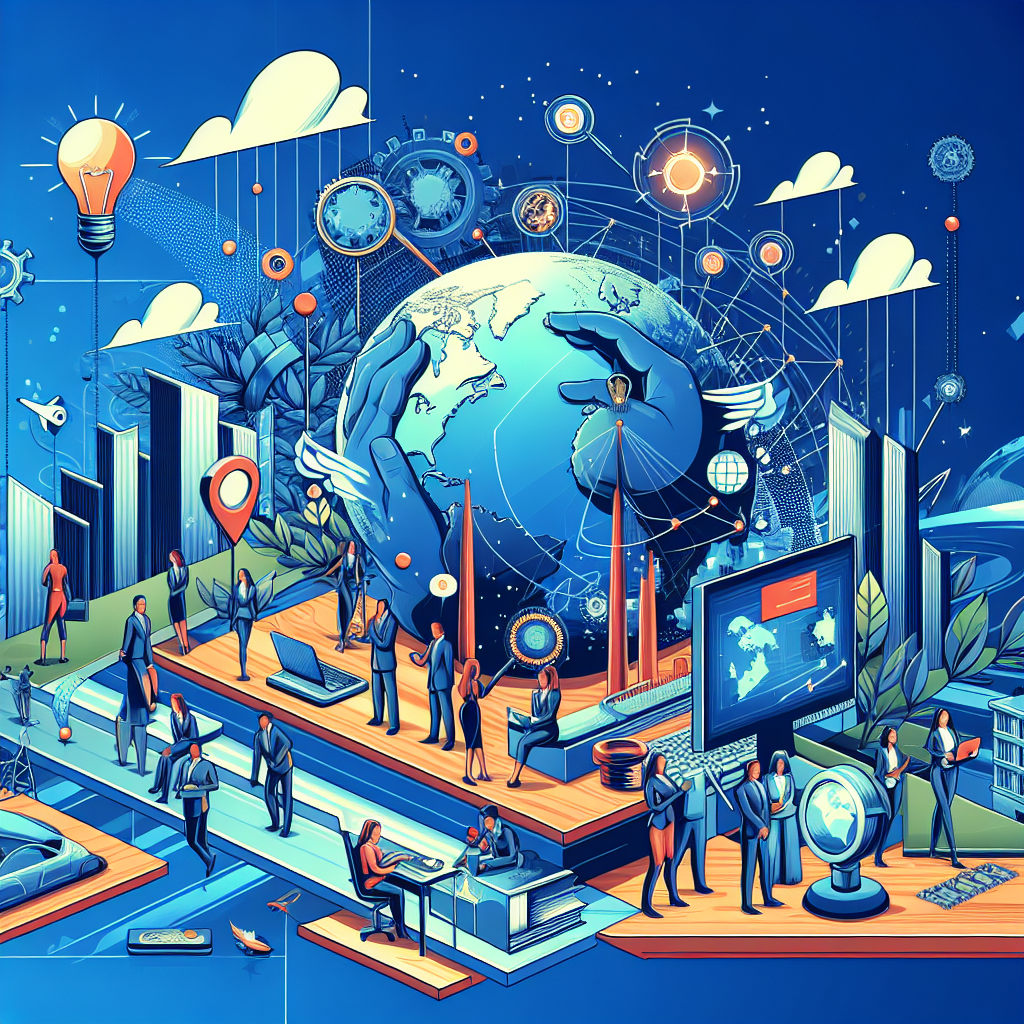
Marketing is constantly transforming, driven primarily by technological advancements that are reshaping how companies interact with their consumers. Among the emerging trends shaping the future of marketing are artificial intelligence (AI), augmented reality (AR), data-driven marketing, and the growing concern for consumer privacy. Each of these trends not only expands the reach and efficiency of strategies but also demands a profound adaptation of traditional practices, creating an environment of continuous innovation.
Artificial intelligence, for example, goes beyond basic automation. It enables sophisticated predictive analytics, personalization at scale, and the development of chatbots and virtual assistants capable of interacting authentically and instantly. These applications increase campaign efficiency, enhance the customer experience, and facilitate decision-making based on more accurate insights.
Augmented reality has stood out for providing immersive experiences that increase audience engagement and interaction with the brand. With the advancement of 5G, which offers high speed and low latency, these experiences can be delivered more smoothly, including on mobile devices, allowing consumers to digitally try out products before purchase, which strengthens trust and reduces purchase barriers.
Data-driven marketing has become the cornerstone for more assertive strategies. With the massive collection of information—driven by big data—it's possible to map behaviors, preferences, and trends in real time, enabling highly segmented and personalized campaigns. However, the greater volume of data also reinforces the need for responsible privacy and security practices, aligned with current regulations such as the LGPD in Brazil and the GDPR in Europe.
Finally, automation integrated with these technologies allows for the optimization of workflows, from launching campaigns to customer service, providing operational efficiency and greater consistency in communication. The combination of automation, AI, big data, and 5G redefines the competitive landscape and creates new opportunities for innovation in business models.
Among the main trends that companies should follow and incorporate into their strategies, we can highlight:
– **Advanced Artificial Intelligence**: In addition to automation, the use of machine learning for predictive campaigns and real-time personalization.
– **Augmented Reality and Virtual Reality**: immersive experiences capable of increasing engagement and product experimentation.
– **Data-Driven Marketing**: hyper-personalized segmentation, predictive analytics, and continuous optimization.
– **Consumer Privacy and Security**: compliance with regulations and building trust through transparency.
– **5G Technology**: enables fast and stable connections for interactive experiences and instant interaction.
– **Big Data**: massive data collection and analysis for deep insights and trend anticipation.
– **Integrated Automation**: optimization and scalability of marketing and relationship processes.
Recent studies indicate that companies investing in these technologies are more likely to increase customer retention by up to 301% and significantly improve the return on investment (ROI) in digital campaigns. The consulting firm Gartner, for example, projects that by 2025 most marketing departments will integrate intelligent solutions that combine AI and big data to automate strategic decisions, increasing accuracy and reducing execution time.
For companies to prepare for and maintain their competitiveness in the face of this rapid evolution, it is essential to adopt a proactive and flexible approach, which includes:
– Invest in ongoing training for teams to use new technological tools.
– To structure a robust infrastructure for data collection, storage, and analysis with a focus on privacy.
– Incorporate agile approaches to test and iterate strategies quickly.
– Prioritize immersive and interactive experiences, leveraging technologies such as AR and 5G.
– Develop partnerships with technology providers and innovative startups.
– Constantly monitor the regulatory landscape to ensure compliance and strengthen reputation.
For marketing professionals, some essential tips for adaptation include:
– **Mastering data analysis concepts and tools** to base decisions on concrete insights.
– **Focus on authentic personalization**, avoiding generic and invasive approaches.
– **Investing in the creation of brand experiences that involve immersive technologies**, enhanced by 5G.
– **Collaborate closely with technology and compliance areas** to ensure strategic alignment.
– **Stay up-to-date with trends and innovations** by participating in industry courses, webinars, and events.
– **Incorporate ethics and transparency** into all actions, especially when dealing with personal data.
The marketing landscape continues to evolve rapidly, and the ability to adapt quickly coupled with the strategic use of technology will be crucial for brand success. By combining technological innovation with a focus on the consumer, companies will be better positioned to foster relevant and lasting connections in an increasingly dynamic and competitive environment.
Conclusion
The evolution of marketing reflects the transformation of consumer behavior and technological advancements. From traditional strategies to digital marketing, the focus has shifted to personalization, interaction, and customer experience. Understanding these changes is essential for professionals and companies seeking success. To boost your business with innovative strategies, contact Thigor Agency at https://thigoragency.com/contratar-agencia-de-publicidade/.

 Portuguese
  Italian
  English