
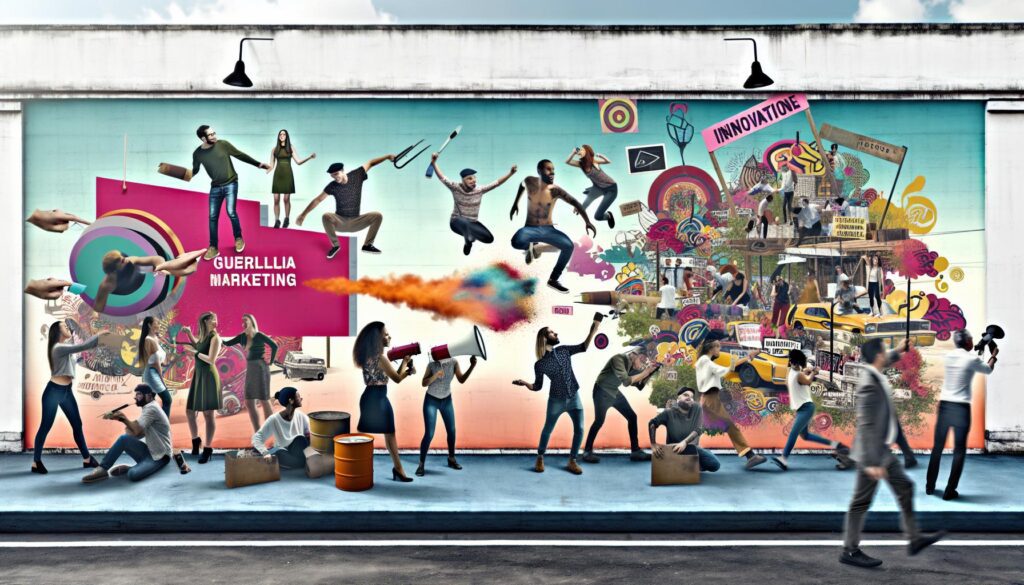
Guerrilla marketing is an innovative approach that challenges traditional methods, using creativity and limited resources to achieve great results. In this article, we will explore essential strategies, practical examples, benefits, and how to apply this effective technique to boost your brand in surprising ways.
The Concept and Origins of Guerrilla Marketing
Guerrilla marketing It is a strategy characterized by the use of creative, innovative, and low-cost actions, with the goal of generating impact and capturing the public's attention in a differentiated and efficient way. Its great strength lies in creativity and originality, replacing high financial investments with well-planned and surprising programs capable of generating strong engagement and organic viral spread.
Historically, the concept of guerrilla marketing has its roots in the 1980s, when the American author... Jay Conrad Levinson He popularized the term in his book "Guerrilla Marketing" (1984). Levinson observed a significant shift in the economic and advertising landscape, where small businesses and entrepreneurs faced major challenges competing with market giants that had multi-million dollar budgets for traditional advertising. In this context, it was necessary to create an approach that leveled the competitive field, exploring creative alternatives that leveraged limited resources with maximum efficiency.
The central concept of guerrilla marketing is driven by unconventional actions, usually carried out in urban or digital environments, that play with the element of surprise, direct interaction with the public, and a clear and impactful message. Classic examples of guerrilla marketing include flash mobs, artistic demonstrations in public spaces, urban interventions that interact with the environment, and campaigns that encourage word-of-mouth and spontaneous sharing.
Jay Conrad Levinson defined several basic principles that form the foundation of guerrilla marketing, including:
- Customer focus: To deeply understand the target audience in order to create actions that emotionally engage them.
- Low cost and high impact: To use accessible resources that still generate a significant impact.
- Creativity and innovation: To avoid the obvious and surprise with original approaches.
- Flexibility and speed: To seize opportune moments, adapting quickly to market conditions.
- Intensive use of word of mouth: Encourage spontaneous sharing to broaden reach.
To illustrate the main differences between traditional marketing and guerrilla marketing, the following table presents a detailed comparison:
| Aspect | Traditional Marketing | Guerrilla Marketing |
|---|---|---|
| Budget | High, usually associated with large investments in paid media. | Low, prioritizing creative and alternative actions. |
| Approach | Conventional, focused on direct and mass advertising. | Unconventional, using surprising and personalized actions. |
| Reach | Broad reach, but with less emotional impact. | Focus on local or segmented impact, generating strong engagement. |
| Execution time | Campaigns planned in advance and with long durations. | Acting quickly and flexibly, taking advantage of opportune moments. |
| Measurement | Based on traditional metrics (audience, revenue) | Focus on engagement, viral marketing, and immediate audience reaction. |
| Media addiction | Strong reliance on traditional media (TV, radio, newspapers) | Reduced use of these media, favoring alternative and digital media. |
Historical examples of guerrilla marketing illustrate its effectiveness and potential for innovation. A classic case occurred in 2002 when Nike carried out an urban intervention in Paris by installing kaleidoscopic panels that interacted with light to form images of its products on unexpected surfaces. Another striking action was McDonald's campaign called "I'm Lovin' It," which used performances in subway stations, directly engaging consumers and generating buzz through a sensory experience outside the norm of traditional advertising.
Furthermore, initiatives such as flash mobs for launching music or films, clever graffiti in public spaces that encourage reflection on social causes, and surprise events in high-traffic areas demonstrate the applicability of guerrilla marketing in various fields, whether commercial, cultural, or social.
Guerrilla marketing remains relevant in the digital age, as social media and urban mobility expand the reach and speed with which these actions can be disseminated. Currently, the challenge is to maintain creativity and authenticity to stand out in an environment saturated with stimuli and information. Levinson's vision continues to guide professionals who seek, with limited resources, to create lasting impact and a genuine emotional connection between brand and consumer.
Common Strategies and Techniques in Guerrilla Marketing
Ambush marketing Brand aggregation is a technique that involves associating a brand with a high-profile event or situation without being an official sponsor, "ambushing" the public's attention and taking advantage of the buzz generated by the event. This strategy allows companies to gain massive exposure with low investment in expensive sponsorships, as well as surprising consumers with creativity and boldness. The challenge lies in avoiding legal or reputational conflicts with the event organizers and ensuring that the brand message is clear and positive. A classic example is Nike's campaign during the 1996 Atlanta Olympics, when the brand distributed caps with the Nike logo and slogans related to the event, even without being an official sponsor – which significantly increased its global exposure.
Flash mobs Flash mobs are quick, organized actions in which a group of people performs an unexpected activity in a public place to capture the public's attention and generate engagement. In guerrilla marketing, this technique is used to create memorable and shareable experiences, fostering word-of-mouth and viral marketing on social media. The advantage of flash mobs lies in their ability to evoke emotions and a sense of exclusivity, at relatively low cost. However, it requires rigorous planning to coordinate participants and deal with external variables such as the environment and public reaction. A famous example was the flash mob organized by T-Mobile at Liverpool Street Station in London in 2009, which went viral worldwide and reinforced the brand's image as young and innovative.
Viral marketing Viral marketing is based on the creation and dissemination of creative and impactful content that stimulates a spontaneous reaction from the public, causing the message to be shared on a large scale without direct investment in traditional media. The advantage of viral marketing is its enormous potential reach at low cost, in addition to building a strong emotional connection with the audience. The main challenge is ensuring that the content is truly relevant, provocative, or entertaining enough to encourage this spontaneous sharing. An iconic example is the "Dumb Ways to Die" video created by Metro Trains Melbourne, which creatively combined humor and a railway safety message, reaching tens of millions of views.
Environmental marketing This technique explores the intelligent use of the physical environment to communicate a brand's message, transforming public or private spaces into interactive experiences that reinforce the emotional connection with the consumer. This technique can transform ordinary places into surprising communication platforms, using everything from art installations to small interventions that alter the perception of the environment. The advantage lies in the ability to surprise the public in their daily lives, promoting greater memorability and engagement. The main challenge is logistics and the need for authorization to use the spaces. A memorable campaign was carried out by Coca-Cola, which installed interactive benches and vending machines in several cities that encouraged consumer interaction, creating a striking brand experience.
Below is an organized list of the main guerrilla marketing techniques with a brief description:
- Ambush marketing: Association with high-visibility events without official sponsorship.
- Flash mobs: Quick and coordinated performances in public spaces to generate social impact.
- Viral marketing: Creating impactful content for spontaneous and massive online dissemination.
- Environmental marketing: Creative use of the physical environment to transform spaces into brand experiences.
- Sensory marketing: Stimulating the senses (smell, touch, hearing) to create strong emotional connections.
- Street marketing: Direct actions in the streets, involving unusual interactions or urban interventions.
- Experiential marketing: Creating actions that actively engage the consumer, promoting immersion in the brand.
Here is a diagram that illustrates the practical application of each of these techniques:
| Technique | Practical Description | International Example | Impact |
|---|---|---|---|
| Ambush marketing | Distribution of giveaways and promotional materials near the event without official sponsorship. | Nike campaign at the Atlanta Olympics (1996) | Stunning global exposure, strengthening the brand at a highly prestigious event. |
| Flash mobs | Amazing choreography in public spaces to engage both in-person and online audiences. | T-Mobile flash mob at Liverpool Street Station (2009) | High social engagement, viral spread, and brand association with innovation and youth. |
| Viral marketing | Creative and humorous video production that can be shared on social media. | “Dumb Ways to Die” — Metro Trains Melbourne | Massive viral spread, effective social message transmission, global recognition. |
| Environmental marketing | Installation of interactive benches and machines in public spaces that encourage interaction. | Coca-Cola — interactive benches in various cities | A memorable experience, strengthening the emotional connection with the brand, and increasing customer loyalty. |
| Sensory marketing | The use of specific scents in stores to stimulate emotions and impulse purchases. | Abercrombie & Fitch — exclusive fragrance in stores | Creating a unique environment, increasing dwell time and sales. |
| Street marketing | 3D drawings on the floor simulating situations related to the product. | Michelin tire campaign featuring urban graffiti. | Immediate attention, interaction with the public, dissemination on social networks. |
| Experiential marketing | Immersive events that allow the public to test or experience the product. | Red Bull — adventure sporting events (e.g., Red Bull Stratos) | Strengthening the image of an innovative and bold brand, fostering deep emotional engagement. |
Benefits and Advantages for Small and Medium-Sized Enterprises
Guerrilla marketing offers a number of benefits that are especially valuable for small and medium-sized enterprises (SMEs), which often face budget constraints and challenges in standing out in competitive markets. Among these benefits, low cost is one of the most evident. Unlike traditional forms of advertising—such as TV, radio, or billboard ads—which require large investments, guerrilla marketing uses creativity and originality to generate impact economically. This allows companies with limited resources to reach their target audience without compromising their budget.
In addition to its reduced cost, guerrilla marketing is a powerful tool for stimulating high creativity. Innovative campaigns capture the public's attention in unexpected ways, creating a memorable experience that adds value to the brand. This creativity manages to escape the saturation of traditional media, facilitating the creation of a strong and differentiated identity, essential for the strategic positioning of SMEs.
Another key point is the potential for viral spread, reinforced by direct audience engagement. When campaigns are surprising, interactive, and often provocative, consumers tend to spontaneously share the content on their social networks and within their close circles, expanding the message's reach without additional costs. This viral effect maximizes the return on investment, something difficult to replicate in traditional marketing.
Beyond the viral effect, this approach creates emotional bonds and greater closeness with the audience, due to the interactive and personalized format of the actions. This interaction positively impacts brand perception, converting simple consumers into active promoters of the company, which translates into increased loyalty and brand recognition in the medium and long term.
Because they involve less conventional and more adaptable strategies, guerrilla marketing allows SMEs to position themselves uniquely against larger competitors with robust budgets. The combination of low cost, high creativity, and effective engagement also contributes to building a solid identity that sets the brand apart in the market.
To illustrate this analysis, a comparison follows between different types of marketing, taking into account cost, impact, and return on investment (ROI), highlighting where guerrilla marketing fits in:
| Type of Marketing | Cost | Impact | ROI |
|---|---|---|---|
| Traditional Marketing (TV, radio, billboards) | High | Tall (but generic) | Medium to Low (depending on volume and repetition) |
| Paid Digital Marketing (Social Media Ads, Google Ads) | Medium to High | Medium to High (segmented) | Medium (dependent on campaign management) |
| Guerrilla Marketing | Low | High (highly focused and creative) | High (due to viral spread and organic engagement) |
| Influencer Marketing | Average | Medium to High (depends on the influencer) | Medium to High (when well aligned with the brand) |
This correlation shows that guerrilla marketing is especially advantageous for small and medium-sized businesses, as it maximizes impact and financial return even with reduced investment, making it a strategic ally for sustainable growth and building an authentic and relevant brand image.
How to Plan and Execute an Effective Guerrilla Marketing Campaign
To plan and execute a successful guerrilla marketing campaign, it's essential to follow a structured roadmap that allows you to maximize the impact of the action with limited resources and in a creative way. Below, we detail each step of the process, accompanied by practical tips and a final checklist that will serve as a guide to ensure the campaign's efficiency.
1. Clear definition of objectives
Before taking any action, determine exactly what you want to achieve with the campaign. Your objectives may include increasing brand visibility, promoting a specific product, engaging a targeted audience, or generating qualified leads. These objectives should be measurable, such as increasing social media traffic by 20% or acquiring 500 new contacts at an event. Having well-defined goals guides the entire execution and facilitates the subsequent evaluation of results.
2. Detailed analysis of the target audience.
With your objectives in mind, deepen your understanding of who your audience is. Identify demographic, behavioral, and psychographic characteristics, as well as the channels they consume most and the environments they frequent. This analysis allows you to choose a guerrilla marketing approach that creates surprise and emotional connection, essential characteristics for success. Use tools such as Google Analytics, social media, or market research to obtain accurate data.
3. Choosing the right guerrilla marketing technique
Guerrilla marketing encompasses various techniques, ranging from actions in public spaces, flash mobs, and artistic interventions to innovative digital campaigns. Select the one that best aligns with your audience and objectives, considering the environment where the action will take place and the resources available. For example, for a young audience in urban areas, interactive street actions or augmented reality can generate high engagement; for a corporate audience, surprise events with exclusive content may be more effective.
4. Creative campaign development
Here, the focus should be on a central idea that evokes surprise, delight, or reflection, exploring the emotional or lighthearted side. The concept needs to be simple and direct, easily understood and shared. Invest in storytelling, bold visual design, and sensory elements that encourage audience interaction. Involving a multidisciplinary team can enrich the concept and ensure that the execution is practical and impactful. It is also essential to plan the execution with attention to logistical details so as not to compromise the original idea.
5. Logistics and legal planning
Check if the event can be held at the chosen location and if any permits or authorizations are required. Consider aspects such as security, schedule, team involved, necessary materials, and a detailed budget. Also plan the pre-launch, which may include teasers to generate curiosity, and the post-event, which involves amplifying the results on social media and other media outlets.
6. Campaign execution
During the implementation phase, ensure that everyone involved is aligned and that the timing is strictly followed. Use technology to record images and videos of the action, which will be essential for later dissemination and to demonstrate the campaign's impact to stakeholders.
7. Measurement and analysis of results
After the campaign is launched, collect data to determine if the objectives were met. Important metrics include social media reach, number of interactions, earned media coverage, increased sales, or lead generation. Tools such as Google Analytics, social media reports, and satisfaction surveys can assist in the analysis. Qualitative feedback from the audience is also valuable for adjustments in future campaigns.
8. Learning and optimization
Use the information obtained to identify what worked well and where there were difficulties. This learning serves to improve processes, avoid common mistakes, and create even more effective campaigns.
Practical tips to avoid common mistakes and maximize impact:
– Do not underestimate the importance of legal planning to avoid fines or interruptions to your case.
Focus on originality, but keep the message aligned with the brand identity.
Test the action on a small scale before applying it on a large scale.
– Prepare the team for unforeseen events and monitor the audience's reaction in real time.
– Utilize influencers and digital channels to maximize future reach.
– Always prioritize genuine audience engagement, avoiding actions that could be interpreted as intrusive or aggressive.
Checklist for a guerrilla marketing campaign:
– Defined and measurable objectives
– Target audience profile mapped in detail
– The chosen guerrilla marketing technique is aligned with the target audience and objectives.
– Creative concept developed with clarity and impact.
– Logistics and legal assessment completed
Detailed and approved budget.
– Prepared and trained team
– Structured pre- and post-campaign outreach plan
– Necessary equipment and materials acquired and reviewed
– Complete record of the action (video, photos, testimonies)
– Defined performance indicators for measurement
– Plan for post-campaign evaluation and feedback established
To further your planning, we suggest some useful resources and tools:
– HubSpot's marketing planning templates
– Canva for creating visual materials.
– Google Analytics for traffic and conversion analysis.
– Trello for task and schedule management.
– Sprout Social for social media monitoring and analysis.
Following this step-by-step process with discipline and focus will significantly increase the likelihood of your guerrilla marketing generating substantial and lasting results for your brand.
Conclusion
Guerrilla marketing is a powerful tool that, when applied correctly, significantly enhances the visibility and impact of brands, especially for small and medium-sized businesses. Creativity and innovation are the pillars of this method, which challenges the conventional, generating engagement and significant results with low investment. To transform your ideas into successful campaigns, rely on the expertise of Thigor Agency and achieve the prominence your business deserves.


 Portuguese
  Italian
  English