
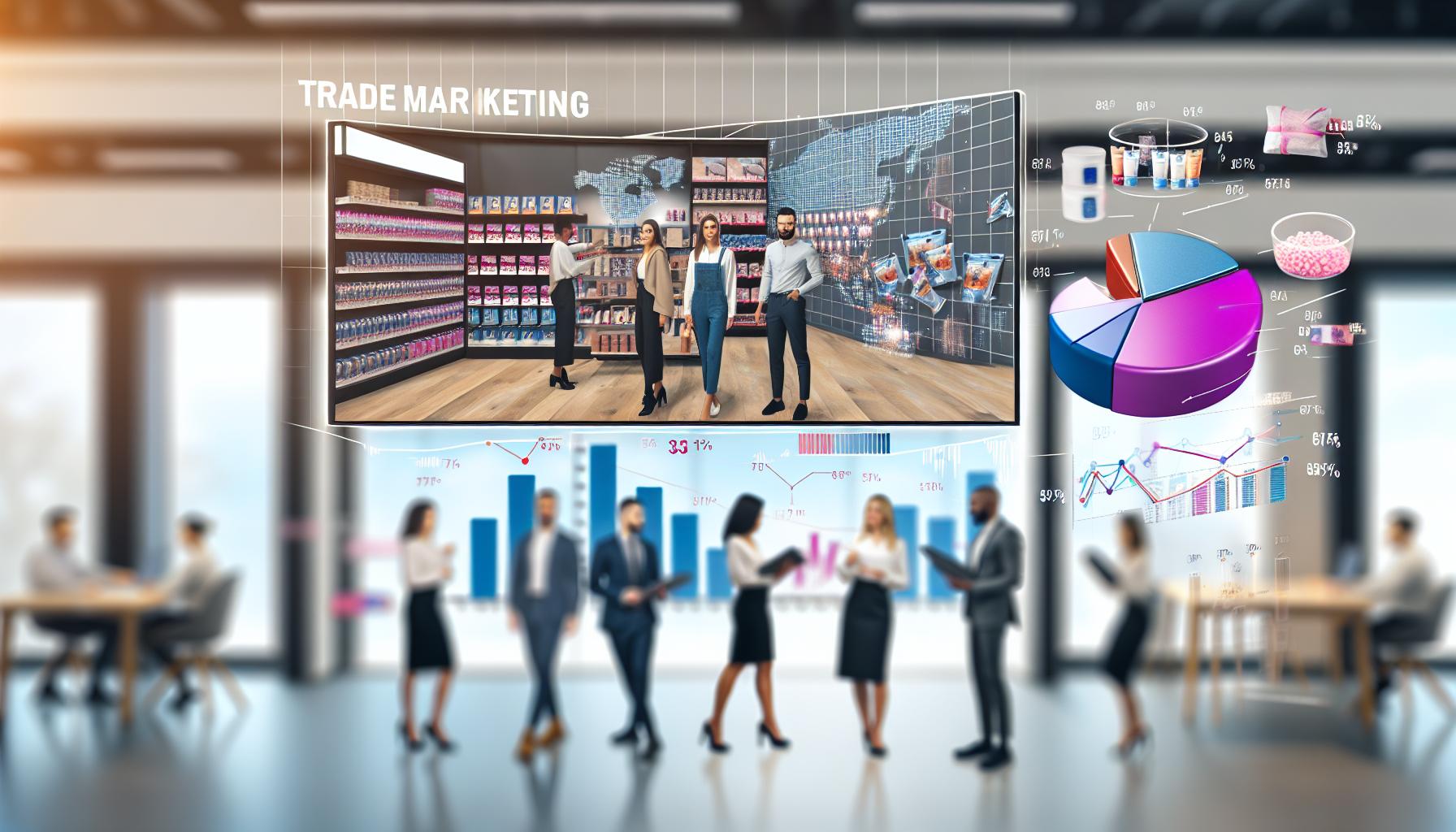
Marketing analytics is a fundamental field that transforms data into valuable insights for strategic decision-making. We will explore the key techniques, tools, and applications that allow companies to maximize their marketing results through the systematic analysis of data.
Fundamentals of Marketing Analytics
Marketing analytics It is the practice of systematically analyzing data with the goal of discovering, interpreting, and communicating meaningful patterns and insights that support strategic decisions in the field of marketing. It is a continuous process of collecting, processing, and analyzing information from multiple sources, seeking to transform raw data into actionable knowledge to improve campaign performance, optimize resource allocation, and anticipate consumer behavior.
Although marketing analytics has its own particularities, it is closely related to related areas such as data science and data analytics. While data science encompasses a broader approach, including algorithm development and machine learning, the focus of marketing analytics is the application of these methods to generate specific value in the marketing field. Data analytics, in turn, represents the more general field of data analysis, of which marketing analytics is a specialization geared towards the market context.
Within marketing analytics, there are different types of analysis that help extract useful information, classified as descriptive, diagnostic, predictive, and prescriptive analytics. Each type has a specific purpose and offers a distinct level of complexity and sophistication, as shown in the following table:
| Type of Analytics | Objective | Example Applied to Marketing | Nature of the Analysis |
|---|---|---|---|
| Descriptive | Summarize what happened. | Campaign performance reports, basic metrics such as click-through rate and conversion rate. | Historical data summarization |
| Diagnostic | Understanding the reasons behind events | Analysis of the causes of sales declines or variations in engagement. | Exploratory, identification of causes |
| Predictive | Predicting what might happen | Customer behavior forecasting models, product demand forecasting | Statistical modeling, machine learning |
| Prescriptive | Recommend actions to optimize results. | Automated suggestions for media targeting, budgeting, and allocation. | Optimization, scenario simulation |
To work effectively in this area, marketing analytics professionals need to develop a robust set of skills and knowledge. Statistics are fundamental for understanding and correctly applying analytical methods, enabling the accurate interpretation of data and the evaluation of the significance of results. Programming, widely used in languages such as Python and R, is essential for handling large volumes of data, developing predictive models, and automating analytical processes. Furthermore, data analysis—which includes cleaning, processing, and visualization—is necessary to transform scattered data into understandable and relevant insights for stakeholders.
With the advancement of the digital environment and the increased use of online channels, the amount of data generated has grown exponentially, giving rise to the phenomenon known as big data. In this context, the importance of marketing analytics increases, as the ability to collect, process, and interpret large volumes of information is essential for companies to maintain competitiveness and respond quickly to market demands. The effective use of marketing analytics allows not only for understanding consumer behavior but also for personalizing experiences, optimizing media investments, and anticipating trends, transforming data into a strategic differentiator in the contemporary digital environment.
Essential Techniques and Tools for Marketing Analytics
Market segmentation Segmentation is a fundamental marketing analytics technique that involves dividing the market into homogeneous groups of consumers with similar characteristics, needs, and behaviors. Segmentation allows companies to create more focused and efficient campaigns, directing resources to specific audiences. For example, a sporting goods store can segment its customers by age group, sports preferences, and consumption habits, using demographic data, purchase history, and digital interactions. This segmentation speeds up the personalization and optimization of messages and offers.
Predictive analytics It involves using historical data to estimate future behaviors, using statistical models and machine learning algorithms. In marketing, predictive analytics is applied to anticipate churn (customer cancellations), identify leads with the highest conversion potential, and predict demand volume for specific products. For example, by combining browsing, purchase, and engagement data in campaigns, a company can predict which consumers are most likely to respond positively to an offer, enabling proactive actions.
Already statistical modeling It uses mathematical techniques to describe and quantify the relationship between marketing variables and business results. Methods such as linear and logistic regression allow us to understand the impact of factors such as price, communication channel, and seasonality on sales or conversion rate. A practical example is the use of logistic regression to analyze the probability of a customer buying a product based on individual characteristics and consumption profile. These models help validate hypotheses, optimize budget, and improve campaign efficiency.
Cluster analysis Cluster analysis is a grouping technique that identifies natural subgroups within data without prior assumptions, making it easier to recognize hidden profiles among consumers. For example, an online retailer can use cluster analysis to segment its customer base into profiles such as "frequent high-income shoppers," "discount hunters," and "new visitors," allowing for specific strategies for each group. This technique is especially useful for identifying promising niches and customizing marketing approaches.
Advanced techniques of machine learning They are also increasingly being incorporated into marketing analytics to extract complex insights from large volumes of unstructured data. Neural networks They simulate the workings of the human brain to identify non-linear patterns and complex relationships, and are used, for example, for sentiment recognition in customer feedback analysis. Decision trees These are interpretable models that classify consumers into different groups according to rules based on their attributes, facilitating decisions such as segmented offers. As for... logistic regression It is widely used to predict the probability of a binary event, such as conversion on a landing page or response to a promotional email.
These combined techniques allow for the identification of consumer behavior patterns, such as purchase frequency, preferred channels, and sensitivity to discounts, as well as predicting market trends and optimizing campaigns by better targeting investments and personalizing messages. For example, integrated analysis can reveal that a particular segment responds better to promotions via social media at specific times, increasing the efficiency of ads and the return on investment.
Among the main tools available for applying these techniques in marketing analytics, the Google Analytics It is the most popular tool for analyzing web traffic and user behavior. The tool collects detailed data on visitor origin, pages visited, time on site, bounce rate, and conversions, allowing for the creation of customized dashboards and real-time monitoring. Its features make it possible to understand the conversion funnel, evaluate the effectiveness of traffic sources (organic, paid, social media), and segment users for more in-depth analysis.
Besides Google Analytics, other tools rely on different specializations:
- Adobe Analytics: Focus on detailed analysis of complex journeys, integration with multiple channels, and advanced personalization.
- HubSpot: It combines CRM, marketing automation, and analytics, useful for data integration and lead management.
- Tableau: A robust data visualization platform, used for exploratory analysis and presentation of insights.
- Mixpanel: Specialized in behavioral analysis of users in applications and on the web, focused on retention and engagement metrics.
- IBM Watson Marketing: It uses artificial intelligence for predictive analytics and automated recommendations.
Below is a comparative table summarizing the features, advantages, and applications of these tools:
| Tool | Key Features | Advantages | Applications |
|---|---|---|---|
| Google Analytics | Web data collection, traffic analysis, conversion funnel, segmentation | Free, easy integration, extensive documentation. | Website monitoring, digital campaign evaluation. |
| Adobe Analytics | Multichannel analysis, advanced modeling, integration with Adobe Experience Cloud. | High customization, corporate support | Large companies with complex analysis needs. |
| HubSpot | Integrated CRM, marketing automation, lead analytics | Ease of use, unification of sales and marketing data. | SMEs focused on inbound marketing |
| Tableau | Advanced visualization, integration with multiple sources. | Flexible and interactive, ideal for data exploration. | Creating dynamic dashboards and reports |
| Mixpanel | Behavioral analysis, engagement metrics, cohort | Focus on digital products, user-driven insights. | Mobile applications, SaaS, digital products |
| IBM Watson Marketing | Artificial intelligence, automated prediction, advanced segmentation | Cognitive capabilities, intelligent automation | Large-scale customized campaigns |
Practical Applications and Benefits of Marketing Analytics
Marketing analytics is strategically applied to optimize advertising campaigns, allowing companies to make decisions based on concrete data rather than assumptions or intuition. Detailed analysis of data collected during a campaign makes it possible to identify which channels, messages, and formats generate the most engagement and conversions, as well as highlighting areas for improvement. With this information, marketing professionals can adjust budgets, redefine segmentations, and personalize offers in real time, increasing the efficiency of their actions and reducing waste.
In consumer segmentation, marketing analytics goes beyond traditional demographics, using observed behaviors, psychographic data, and purchase histories to create highly specific and relevant groups. This allows for targeted messaging that resonates with the real needs of each segment, increasing the likelihood of conversion. An example is the use of predictive analytics to identify customers with a higher potential for churn, enabling the development of personalized retention campaigns.
Offer personalization is another crucial point. By using algorithms that cross-reference different data sources, such as browsing history, stated preferences, and responses to previous campaigns, companies can create tailored offers. This approach significantly improves the consumer experience, increasing their engagement and brand loyalty. For example, e-commerce businesses that recommend products based on previous purchases achieve higher conversion rates, as well as increasing the average order value.
Maximizing return on investment (ROI) is the central goal of marketing analytics. Through the accurate measurement of each action's performance, it's possible to calculate the financial impact generated and identify investments that yield the best results. With the use of interactive dashboards and visualization tools, managers have a clear view of performance across different areas and can reallocate resources to strategies that demonstrably generate greater value.
Exemplary case studies illustrate the transformative power of marketing analytics. Netflix, for example, uses vast volumes of data to personalize content recommendations, increasing user retention time on the platform and reducing churn. Another notable case is Amazon, which employs advanced algorithms to segment consumers and adjust dynamic pricing, optimizing conversions and sales. In the retail sector, Sephora implemented real-time analytics in its digital campaigns, increasing immediate customer response and raising its retention rate.
Among the tangible benefits for organizations that adopt marketing analytics, the following stand out:
• Better understanding of the customer, enabling more assertive and personalized strategies.
• Efficiency in budget allocation, minimizing spending on inefficient channels and campaigns.
• Increased conversion rates through segmentation and tailored offers.
• Improved customer loyalty, with actions aimed at retaining high-value clients.
• The possibility of clearly and objectively measuring results, facilitating evidence-based decision-making.
Furthermore, real-time analytics is fundamental to the dynamic environment of digital marketing. The ability to process data instantly allows for quick adjustments to campaigns, such as changing messages, pausing underperforming ads, or increasing traffic to promising channels. When combined with automation, this dynamic transforms marketing into an adaptive and scalable process, capable of responding to changes in consumer and market behavior with agility. Tools that implement intelligent automation allow for the triggering of personalized communications at the exact moment the customer shows interest, maximizing results without requiring constant manual intervention.
Thus, marketing analytics not only reinforces the effectiveness of existing strategies, but also enables the creation of new, evidence-based approaches, ensuring that each investment delivers the maximum possible value.
Current Challenges and Future of Marketing Analytics
The use of marketing analytics faces complex challenges that directly impact its effectiveness and scope. Among the main obstacles is data quality, which is frequently fragmented, inconsistent, or outdated due to the diversity of data collection sources and the absence of robust governance processes. Inaccurate data compromises the reliability of analyses and, consequently, strategic decisions based on this information. Furthermore, consumer privacy has gained prominence in an increasingly stringent regulatory landscape. In Brazil, the General Data Protection Law (LGPD) imposes strict guidelines regarding the processing, storage, and sharing of personal data, requiring companies not only to comply with the law but also to be transparent and ethical in the use of the information collected. This regulatory environment imposes limitations and demands technological and organizational structures capable of ensuring data protection without compromising analytical depth.
Another significant challenge is the inherent complexity of the technologies involved in marketing analytics. Advanced tools demand professionals with multidisciplinary knowledge, encompassing statistics, programming, data science, and business understanding—a profile that is still lacking in the market. Gradually, the learning curve for using sophisticated platforms becomes a limiting factor for many organizations, which face difficulties in extracting deep insights from complex and constantly evolving systems.
The integration of data from multiple sources, such as CRM, digital platforms, social networks, behavioral data, and sales data, represents another frequent barrier. This heterogeneity creates silos that hinder the consolidation of data into a single holistic view of the customer, impairing the construction of effective predictive models and consistent analyses. The challenge lies in harmonizing this data, requiring flexible architectures and robust methodologies for management, cleaning, and unification—a process that demands significant investment in infrastructure and processes.
The future of marketing analytics is increasingly linked to advances in artificial intelligence (AI) and machine learning (ML). These technologies enable more accurate predictions, based on the recognition of complex patterns and the massive processing of data in real time, allowing for near-instantaneous decision-making and intelligent automation of strategies. The combination of AI with marketing translates into adaptive algorithms capable of learning and dynamically adjusting to consumer behavior, increasing the effectiveness of campaigns and operational efficiency. Cognitive analytics emerges as a new level, going beyond simple data correlation to semantic and predictive interpretation, including understanding the context, emotions, and intentions of the customer, enriching strategies with qualitative insights that were previously inaccessible.
The evolution of algorithms applied to marketing reflects the movement towards hybrid models, which combine traditional analysis techniques with deep neural networks, natural language processing (NLP), and predictive analytics, considerably expanding the potential for personalization and audience engagement. More sophisticated algorithms allow for dynamic real-time segmentation and highly contextual automated recommendations, facilitating the creation of unique experiences for each consumer.
This scenario presents ample opportunities for companies that invest in the continuous development of skills and technological innovation. Businesses that focus on training their teams to handle emerging tools and fostering a culture of experimentation gain a significant competitive advantage in an increasingly data-driven market. The alignment between strategy, technology, and talent is crucial to transforming challenges into sustainable strategic advantages, promoting greater agility, intelligence, and effectiveness in marketing operations.
Conclusion
Marketing analytics is a powerful tool that transforms data into strategic decisions, boosting the success of companies in today's market. Mastering its techniques, overcoming challenges, and keeping up with trends is essential to achieving superior results and building customer loyalty. To propel your marketing strategy with effective solutions, Contact Thigor Agency Discover how we can help your company grow.


 Portuguese
  Italian
  English