
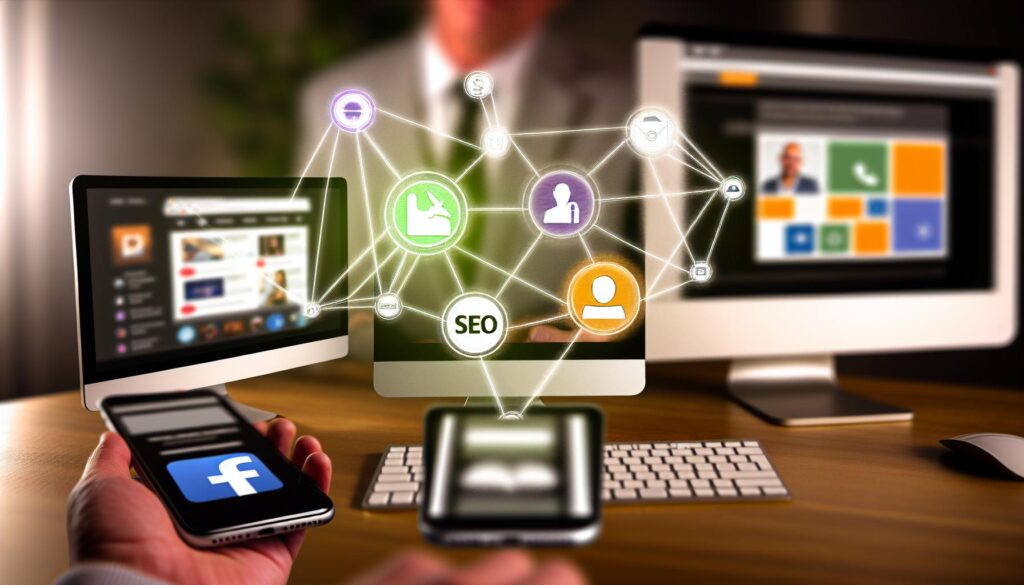
In digital marketing, traffic sources are fundamental for driving visitors to your website or platform. Understanding the different origins of traffic allows for more effective strategies, maximizing results and improving return on investment.
Understanding Traffic Sources in Digital Marketing
Traffic sources In marketing, these refer to the origins or channels through which visitors arrive at a website or digital platform. Understanding these sources is fundamental for companies to effectively direct their efforts, allocating resources where there is the greatest potential return and adjusting strategies for each type of audience. Traffic sources are mainly classified into three categories: organic traffic, paid traffic e direct traffic.
Organic traffic This refers to traffic that reaches your website naturally, without direct investment in advertising. Typically, this category results from SEO (Search Engine Optimization), content marketing, and an active presence on social media or blogs. For example, a user who searches Google for a specific term and clicks on your website in a non-sponsored position is generating organic traffic. This source is valuable because it tends to bring a more qualified audience interested in your content, as well as delivering sustainable, long-term results.
Paid traffic This refers to visitors who access the site through sponsored ads. This type of traffic encompasses various platforms, such as Google Ads, Facebook Ads, Instagram Ads, LinkedIn Ads, among others. The main characteristic of this traffic is the possibility of precise targeting and rapid generation of visitors to the website. For example, a company that launches an ad campaign on Facebook to promote a specific offer is generating paid traffic. Although it requires constant investment, this type of traffic is essential for specific campaigns, launches, or one-off promotions, when the need for immediate results is greater.
Direct traffic This occurs when a visitor accesses the website by directly typing the URL address into their browser, using a bookmark/favorite, or clicking on links in emails that don't have tracking parameters. This origin indicates access from users who are already familiar with the brand or have a consolidated interest. For example, someone who types "www.youronlinestore.com" to access an online store already has a direct relationship with the brand, and this source usually shows high conversion rates.
In addition to these three main categories, it is important to mention other sources that can influence traffic, such as social traffic (generated by links shared on social networks that do not involve paid ads), referral traffic (originating from links placed on partner websites or blogs), and email marketing traffic (from newsletters and campaigns sent to the contact database).
Correctly identifying these sources allows companies to assess which channels are most profitable and which audience segments respond best to each type of approach. Campaign optimization is based on a detailed analysis of the performance of each source, helping to reduce costs and increase return on investment (ROI).
| Traffic Source | Description | Examples | Features |
|---|---|---|---|
| Organic Traffic | Visitors who arrive organically, without direct investment in advertising. | Google search, SEO results, blog articles | Qualified, sustainable, low direct cost, longer delay for results. |
| Paid Traffic | Visitors generated by paid advertisements on different digital platforms. | Google Ads, Facebook Ads, Instagram Ads, LinkedIn Ads | Fast, targeted, variable cost, ideal for one-off campaigns. |
| Direct Traffic | Visitors who access the site directly via URL or bookmarks. | By typing www.yourstore.com into the browser's address bar. | High loyalty, higher conversion rates, indicate brand recognition. |
| Referral Traffic | Visitors who click on links left on other websites or blogs. | Links on partner blogs, news portals, and partnerships. | It depends on partnerships, it can be qualified, it contributes to authority. |
| Social Traffic (Organic) | Visitors who arrive via social media without paid advertising. | Organic posts on Facebook, Instagram, Twitter | Free engagement, variable reach, good for community building. |
| Email Marketing Traffic | Visitors who access the site via links in email campaigns. | Newsletters, promotions sent by email | Segmented, high conversion potential, requires a qualified user base. |
Techniques for Attracting Organic Traffic
Organic traffic sources are fundamental to any digital marketing strategy aimed at sustainability and building long-term authority. Unlike paid traffic, which depends on continuous investment, organic traffic is generated through practices that increase the visibility of a website or content naturally, without the need for direct advertising.
One of the most widely used strategies for attracting organic traffic is SEO (Search Engine Optimization). This practice consists of optimizing the website and its content so that they appear more prominently in search engine results, such as Google. SEO involves everything from the strategic selection of keywords and the creation of a user-friendly website architecture to ensuring a good user experience, with fast loading times and intuitive navigation. Well-optimized content has a greater chance of reaching the top positions, attracting a constant and qualified flow of visitors.
Content marketing is another essential strategy for growing organic traffic. Creating articles, videos, infographics, ebooks, and other content formats that deliver real value to the audience generates engagement, increases time spent on the website, and promotes sharing on social media. This approach not only helps with organic ranking but also strengthens brand credibility, as the audience recognizes the authority and trustworthiness of the presented content.
Search engine optimization goes beyond keywords and text: technical aspects, such as creating user-friendly URLs, correctly using HTML tags (titles, meta descriptions, headings), and ensuring the site is responsive to mobile devices, are crucial. Search engines value websites that offer a complete user experience, penalizing those that do not meet these standards.
Social media, while not generating direct traffic as lasting as SEO, acts as a complementary channel to amplify the reach of organic content. Networks like Instagram, LinkedIn, and Facebook are used to disseminate relevant content, increase engagement, and drive users to the website. When these networks are integrated with content strategies aligned with SEO, they maximize organic traffic gains over time.
It's worth highlighting that organic traffic is sustainable because it's based on content relevance and user satisfaction. Unlike paid traffic, it tends to grow progressively, provided that practices are constantly improved and updated according to changes in algorithms and consumer behavior. Furthermore, organic traffic provides greater credibility, as users tend to trust natural results more than paid advertisements.
Among the main factors that influence organic traffic, the following stand out:
– **Content Quality:** Original, informative content aligned with the audience's needs.
– **Keyword research and usage:** identify terms that the target audience is actually searching for and apply them strategically.
– **Technical SEO:** optimizing website structure, loading speed, mobile-friendliness, and proper use of metadata.
– **Domain authority:** high-quality links originating from relevant and trustworthy websites.
– **User experience:** easy navigation, intuitive design, and accessibility.
– **Social media activity:** continuous promotion and sharing of content.
– **Constant updating:** keeping the content relevant and up-to-date according to market trends and changes.
To implement these practices effectively, some practical tips can be applied:
– Conduct periodic SEO audits to identify and correct technical flaws.
– Create an editorial calendar focused on topics relevant to the audience.
– Use keyword research tools to align content with actual searches.
– To produce content in varied formats to meet different preferences and broaden reach.
– Invest in building natural links through partnerships, guest posts, and networking with influencers.
– Monitor content performance using analytical tools to adjust strategies.
– Optimize titles, meta descriptions, and headings to make pages more attractive in search results.
– Ensure that the website is responsive, fast, and accessible on all devices.
Adopting these organic traffic strategies not only reduces dependence on paid media investments, but also creates a solid base of visitors who are genuinely interested in the content offered, increasing the chances of conversion and customer loyalty. In the long term, this approach translates into digital authority and sustainable competitive positioning within the market.
Strategies to Increase Paid Traffic
Paid traffic sources Paid traffic is essential for accelerating the results of digital marketing strategies, especially when there is a need for fast and targeted reach. Unlike organic traffic, which requires time and consistency to consolidate results, paid traffic allows for immediate exposure of the brand or product to specific audiences, something crucial in launch campaigns, seasonal promotions, or for quickly testing new offers.
Among the main paid traffic platforms, the following stand out. Google Ads e Facebook Ads, Each platform has its own particular characteristics that directly influence campaign performance. Google Ads, for example, offers various ad formats, such as search network, display network, videos (YouTube), and shopping, allowing you to reach users at the moment of search intent or through a broader reach. Facebook Ads, also active on Instagram, is powerful for demographic, behavioral, and interest-based targeting, making it ideal for engagement and building an active audience.
In addition to these, other platforms such as LinkedIn Ads, Twitter Ads, TikTok Ads, and Pinterest Ads are gaining ground, each with specific audiences and formats, requiring prior research to understand which one best aligns with the business profile and campaign objectives.
It's crucial to understand that investment in paid traffic must be coupled with rigorous monitoring of metrics to guarantee a return on investment (ROI). Indicators such as cost per click (CPC), cost per acquisition (CPA), conversion rate, return on ad spend (ROAS), bounce rate, and engagement are essential for optimizing campaigns and avoiding wasted budget. Constant data analysis allows for strategic adjustments to audience, creatives, formats, and bids, maximizing budget efficiency.
Below is a table summarizing the main types of ads on the most used platforms, along with their advantages, disadvantages, and practical tips for optimization:
| Ad Type | Advantages | Disadvantages | Tips for Optimization |
|---|---|---|---|
| Google Ads – Search Network | Reach users with high purchase intent; generally competitive CPC; fast results. | Highly competitive keywords can increase costs; configuration requires technical knowledge. | Use negative keywords to avoid irrelevant traffic; optimize and test different match types; focus on clear and direct ads. |
| Google Ads – Display Network | Wide visual reach; good for brand recognition; contextual and interest-based targeting. | Lower direct purchase intent; possibility of irrelevant clicks; beware of low conversion rates. | Use remarketing to target audiences who have already shown interest; create attractive visual ads that are optimized for mobile devices. |
| Facebook Ads (including Instagram) | Detailed segmentation by interests, behavior, and demographics; diverse formats such as videos, carousels, and stories. | Algorithms are constantly changing; high competitiveness can increase CPC; there is a need for constant production of creative content. | Test multiple versions of creatives; target custom and lookalike audiences; track metrics daily for quick adjustments. |
| LinkedIn Ads | B2B targeting with advanced filters; ideal for corporate and professional campaigns. | Costs (CPC and CPM) are generally higher; smaller audience compared to other social networks. | Create ads with professional language and clear benefits; use targeting by job titles, industries, and companies; invest in rich content. |
| TikTok Ads | High engagement rate; young and growing audience; creative and viral formats. | It requires a more informal and trend-driven approach; less control over targeting compared to Facebook. | Focus on short, dynamic videos; follow trends to create relevant content; conduct constant A/B testing. |
A conscious and strategic investment in these paid traffic sources not only amplifies the audience but also strengthens the brand, complementing the organic strategies discussed earlier. With constant monitoring of metrics, it's possible to calibrate every real invested to obtain maximum results, increasing the efficiency and scalability of marketing campaigns.
Integrating and Optimizing Traffic Sources for Effective Results
Integrating diverse traffic sources into a single, cohesive strategy is essential to maximize results and ensure that efforts are complementary. This means unifying the use of organic and paid traffic, leveraging the reach and targeting potential of each source to create a more efficient customer journey. For this integration to work, accurate data measurement and analysis are crucial, as this is the only way to understand audience behavior at each touchpoint and adjust investments based on actual performance.
Data analysis allows you to identify which sources deliver qualified traffic, generating greater engagement and conversion, and which have low returns, enabling the redirection of resources to more efficient channels. A very useful technique for this is building conversion funnels that map the user's journey from the first interaction to closing the sale or achieving the objective defined by the strategy. At the top of the funnel, for example, organic traffic campaigns can educate and engage the audience, while paid ads located in the middle and bottom of the funnel help nurture and convert these leads.
Combining organic and paid traffic requires a clear understanding of the stages of the customer journey and the value proposition in each interaction. Organic content, such as blogs, videos, and informative posts, helps build authority and trust, while paid ads can be used to accelerate the reach of these messages and target audiences with a higher propensity to buy. In this way, paid traffic enhances organic traffic and allows for a more strategic distribution of content, while also collecting fundamental data for the continuous refinement of the strategy.
Beyond building funnels, the use of analytical tools is essential to ensure that interactions are constantly monitored, measured, and optimized. These tools enable the correct attribution of traffic, analysis of user behavior, identification of abandonment points, and evaluation of cost per acquisition (CPA), among other indicators. The use of real-time data, whenever possible, allows for quick adjustments to organic campaigns and actions, ensuring greater efficiency in the use of budget and effort.
Among the recommended tools for this analysis and optimization, the following stand out:
– Google Analytics: essential for understanding visitor behavior, bounce rate, most visited pages, and paths taken.
– Google Tag Manager: to facilitate tag management and capture specific events on the website without the need for complex programming.
SEMrush or Ahrefs: useful for keyword research, competitive analysis, and monitoring organic ranking.
– Hotjar: to analyze user behavior through heatmaps and session recordings, highlighting pain points and opportunities for improvement.
– Facebook Analytics (or Meta Ads Manager): to track the performance of paid campaigns and understand the user journey within social media.
– Power BI or Data Studio: dashboard creation platforms that aggregate data from multiple sources, facilitating the integrated visualization and interpretation of results.
With these tools and the implementation of a rigorous monitoring system, it's possible to create a constant optimization cycle that enhances the interaction between organic and paid traffic, adjusting campaigns, content, and funnels to achieve business objectives in a scalable and sustainable way. Thus, the traffic marketing strategy ceases to be a fragmented set of actions and transforms into an intelligent mechanism aligned with generating real results.
Conclusion
Mastering traffic sources in digital marketing is essential to achieving better results and reaching your target audience efficiently. By understanding the characteristics and strategies of each source, it's possible to optimize investments and expand your reach with quality. To further enhance your strategies, contact Thigor Agency and count on specialists to boost your business.



 Portuguese
  Italian
  English