
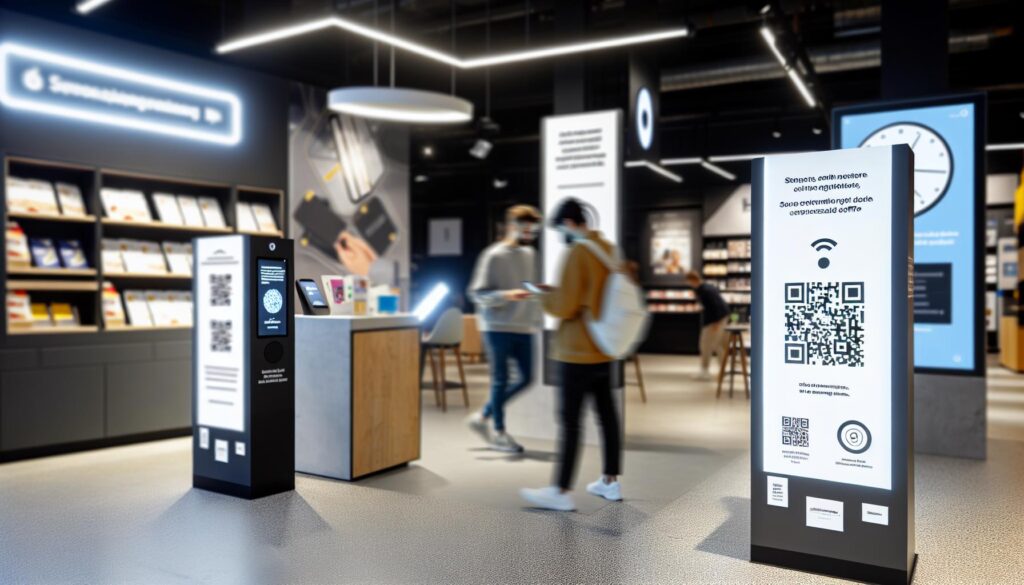
Proximity marketing is a strategy focused on connecting brands to consumers in nearby environments, using technologies and approaches that value local interaction. This article explores the concepts, techniques, advantages, and challenges of proximity marketing, demonstrating its relevance in today's digital and physical world.
What is Proximity Marketing?
O proximity marketing Proximity marketing is a strategy based on targeted communication with an audience located in a specific physical environment, with the goal of establishing an immediate and relevant connection between brands and consumers. Unlike traditional approaches, which often focus on broad audiences and segmentations based on generic demographic or behavioral characteristics, proximity marketing emphasizes the local context—that is, the exact time and place where the potential customer is located. This spatial proximity allows for intense personalization of messages, making communication more effective and increasing the chances of conversion.
The central objectives of proximity marketing include increasing consumer engagement, promoting real-time offers, improving the shopping experience, and strengthening the relationship between the brand and the customer. This strategy also aims to stimulate physical visits to establishments, increase the average ticket price, and generate loyalty by providing exclusive benefits and content adapted to the user's journey at that moment.
Among the main characteristics of proximity marketing are:
– Direct and immediate interaction with the public at their physical location;
– Using contextual data to deliver personalized messages;
– Integration between digital channels and physical points of sale;
– Application of technologies that allow the detection of the consumer's presence in delimited areas;
– Focus on real-time user experience, with relevant offers tailored to the environment.
It is crucial to understand that proximity marketing differs from other forms of marketing, such as conventional digital marketing, which operates in virtual environments without the need for a prior physical location, or mass marketing, whose communication is indiscriminate and lacks personalization. While traditional digital marketing may be based on demographic profiles and general interests, proximity marketing uses geographic space and local context as key elements to tailor its actions, creating interactivity that respects and leverages the consumer's exact moment.
In practice, this strategy is widely used in various sectors, demonstrating its versatility and efficiency. In retail, for example, physical stores employ beacons—small devices that communicate with smartphones via Bluetooth—to send discount coupons, product information, and invitations to exclusive events as soon as a consumer enters the store or passes by a window display. Restaurants can use geolocation and Wi-Fi to identify frequent customers and offer personalized promotions or new dishes based on previously registered preferences.
Sectors such as tourism and events also benefit from proximity marketing: museums and festivals use indoor location systems to guide visitors through exhibitions, while shopping malls and airports send notifications that facilitate navigation and highlight nearby points of interest. Another practical example is the use of free Wi-Fi in public areas to capture behavioral data and, with this, personalize communication and improve the user experience, offering relevant content and clear promotions according to their route.
Technologies such as Bluetooth Low Energy (BLE), Wi-Fi, beacons, and geolocation systems are essential to enabling these actions, as they allow brands to determine the consumer's presence with high precision and send messages in real time, creating two-way communication that respects personal space and values the moment of interaction.
In short, proximity marketing is an approach that translates the principle of relevance and extreme personalization into contextualized actions, adapting to the physical environment to build stronger, more efficient, and lasting connections between brands and audiences. Its practical application, enhanced by location technologies and instant communication, transforms physical spaces into dynamic scenarios for commercial engagement and authentic relationships.
Techniques and Technologies Used in Proximity Marketing
Proximity marketing relies on a specific set of techniques and technologies that allow for direct, personalized, and real-time communication with the consumer, especially when they are near the point of sale or in strategic physical environments. Among the main tools that enable this approach are beacons, NFC (Near Field Communication) technology, Wi-Fi marketing, and QR codes, in addition to other digital solutions that expand the possibilities for interaction and engagement.
Beacons Beacons are small devices that use Bluetooth Low Energy (BLE) technology to send signals to nearby smartphones. They work by transmitting low-power radio waves, which can be picked up by specific applications installed on the consumer's mobile phone. When detected, the beacon can trigger pre-configured actions, such as sending exclusive offers, discount coupons, or relevant information about products and services available at that location. The main advantage of this technology is its low energy consumption, enabling continuous and economical operation. Beacons are widely used in shopping malls, events, museums, and physical stores to enrich the customer experience with contextualized and timely content.
NFC (Near Field Communication) NFC operates at a very short distance, generally less than 10 centimeters, allowing the exchange of information between compatible devices through physical contact or proximity. This technology is quite popular in smartphone payments, but it is also a powerful tool for proximity marketing. With it, it is possible to offer consumers immediate access to detailed product information, perform check-ins, or enable exclusive services simply by bringing their device close to an NFC tag. NFC interaction is intuitive and fast, making it excellent for campaigns aimed at immediate conversions and personalized experiences at the point of sale.
Wi-Fi marketing It is based on offering free internet access in commercial establishments, collecting valuable data such as browsing habits, dwell time, and customer flow. When a consumer connects to the establishment's Wi-Fi, they can receive personalized messages, exclusive promotions, or invitations to participate in specific actions, all based on that user's profile and behavior. Furthermore, Wi-Fi marketing allows for mapping customer movement within the physical space, aiding in layout optimization and the creation of more effective campaigns. Because it's a technology present in most smartphones, Wi-Fi marketing has a relatively wide reach and proves efficient in building customer loyalty and increasing average order value.
You QR codes These are two-dimensional codes that can be quickly scanned with a smartphone camera to direct the user to digital content, such as sales pages, videos, coupons, or satisfaction surveys. They are simple, low-cost, and extremely versatile tools for integrating the physical and digital worlds in proximity marketing campaigns. They can be printed on products, shop windows, displays, or labels, and their adoption allows immediate and interactive access to additional information, adding value to the consumer experience and generating strategic data for results analysis.
Other complementary technologies, such as GPS geolocation systems combined with Wi-Fi or mobile network data, heatmaps for analyzing movement within the establishment, and mobile applications with augmented reality functionalities, also enrich proximity marketing strategies, promoting increasingly segmented, dynamic, and responsive communication to customer behavior.
These technologies can be synergistically integrated into business strategies to create campaigns that deliver relevant messages at the right time and in the right place, stimulating consumer action. For example, a retail chain could use beacons to alert customers about a specific promotion upon entering a section of the store, use QR codes to provide technical details about a product, or NFC for quick checkout, complementing customer service with Wi-Fi marketing that allows for sending satisfaction surveys or invitations to loyalty programs.
Below is a comparative table summarizing the main characteristics of these technologies in the context of proximity marketing:
| Technology | Approximate Range | Cost | Main Application |
|---|---|---|---|
| Beacons (Bluetooth Low Energy) | Up to 50 meters | Medium (hardware + development) | Sending notifications to specific locations, targeted promotions. |
| NFC (Near Field Communication) | Up to 10 cm | Low (simple tags and readers) | Payments, quick access to content, and fast interactions at the point of sale. |
| Wi-Fi Marketing | Up to 100 meters (Wi-Fi coverage area) | Medium (infrastructure and management platform) | Data capture, sending promotions via login, flow analysis. |
| QR Codes | Direct view (scan via camera) | Low (generation and printing) | Connecting the physical and digital worlds, providing quick information, and offering interactive campaigns. |
Benefits and Advantages of Proximity Marketing for Businesses and Consumers
Proximity Marketing
Proximity marketing has become an essential strategy for direct and efficient relationships between companies and consumers, providing a series of benefits that positively impact both sides of this exchange. From the companies' point of view, this approach allows for a significant increase in target audience engagement, since offers and messages are delivered at strategic times and in specific locations, raising the response rate to campaigns. This represents a considerable advance when compared to traditional marketing campaigns, which are often generic and poorly targeted.
Beyond engagement, the personalization of offers is one of the great differentiators of proximity marketing. Using data collected in real time, companies can adapt their communications according to the consumer's profile and behavior, making interactions more relevant and, consequently, increasing the chances of conversion. This personalization also directly contributes to improving the customer experience, as they begin to feel that the brand understands their needs and preferences, increasing satisfaction and the likelihood of future returns.
Another important point is the operational and financial efficiency of campaigns that employ proximity marketing. By focusing on specific segments within a limited space and based on concrete data, companies avoid wasting resources on broad and ineffective advertising. This efficiency provides a better return on investment (ROI), since the messages reach those who are truly interested in a precise way, reducing costs and increasing effectiveness.
Customer loyalty is a natural consequence of this closer and more personalized interaction. Customers who receive relevant offers and feel treated differently tend to develop a stronger bond with the brand, becoming spontaneous advocates and repeating their purchases more frequently. Research indicates that campaigns using proximity technologies such as beacons and NFC register up to 201% higher customer retention compared to conventional methods.
From the consumer's perspective, the experience is greatly enhanced by the relevance of the information received. They are only exposed to content that truly interests them, at opportune moments, which reduces the feeling of intrusion and excessive advertising. This practice is seen as an evolution of marketing, as it respects the customer journey and values their time and attention. Furthermore, personalization strengthens the perception of value, since promotions and discounts are specifically designed for individual needs, fostering a closer and more trustworthy relationship with the brand.
To clearly illustrate the benefits of proximity marketing, the table below lists the advantages received by companies and consumers:
| Benefits | For Businesses | For Consumers |
|---|---|---|
| Increased Engagement | Higher engagement rates with targeted, real-time campaigns. | Receiving relevant and timely content and offers. |
| Offer Customization | Adjusting messages according to the audience's profile and behavior. | Promotions and information customized according to personal preferences. |
| Improved Customer Experience | Creating a more attractive and satisfying shopping environment. | More fluid interaction, with less noise and greater convenience. |
| Efficiency in Campaigns | Cost reduction and increased ROI in advertising campaigns. | Less exposure to irrelevant and intrusive advertisements. |
| Loyalty | Building lasting relationships and increasing lifetime value. | Preference for brands that understand and value their needs. |
Several studies reinforce the effectiveness of this type of marketing. A report by Digital Commerce 360 highlights that 71% of consumers prefer to receive personalized offers when they are near a physical store, which implies an average increase of 15% in sales for stores that adopt proximity marketing strategies. Another study conducted by Epsilon shows that 8% of consumers are more likely to buy when they receive personalized campaigns, demonstrating the importance of technology associated with the strategy.
These data reinforce the idea that proximity marketing is not just a technological trend, but a significant shift in the relationship between brands and customers, based on mutual respect and the delivery of real value. The intelligent integration of these strategies into daily business operations yields measurable results that translate into sustainable growth, solidifying this model as essential for companies that want to stand out in today's market.
Challenges and Best Practices for Implementing Proximity Marketing
Implementing proximity marketing strategies presents several challenges that companies need to recognize and manage to achieve effective results. One of the main obstacles is related to consumer privacy issues. With growing concern about the use and protection of personal data, organizations must ensure that the collection and use of information comply with legislation such as the LGPD (General Data Protection Law) in Brazil, in addition to demonstrating transparency in the practices adopted. A lack of clarity can generate distrust among consumers and hinder campaign engagement, negatively impacting brand reputation.
Another significant challenge involves the costs associated with deploying the technologies necessary for proximity marketing. Equipment such as beacons, location sensors, and analytics software require considerable investment not only in terms of acquisition but also maintenance and constant updates. Furthermore, integrating these technologies with existing systems may require specific customizations and specialized labor, further increasing the resources involved. Therefore, it is essential that financial planning considers these aspects to ensure the sustainability of the initiative.
Technological adoption also represents a barrier, especially in markets where consumers have varying levels of familiarity with or access to mobile devices compatible with the tools used. Companies must carefully assess their target audience profile to identify potential limitations and adapt their strategies, seeking accessible engagement methods that avoid creating frustration or exclusion. This issue is directly connected to the correct audience segmentation: precisely defining the target group is essential to optimize efforts and avoid wasting resources on generic or poorly targeted tactics.
To overcome these challenges, best practices recommend a completely transparent approach with consumers, clearly informing them what data is collected, for what purposes, and how it will be protected. This communication should be simple and accessible, reinforcing the company's commitment to ethics and respect for privacy. Simultaneously, the responsible use of data is essential, limiting internal access only to the professionals involved, adopting rigorous security protocols, and promoting periodic audits to ensure compliance.
Constant innovation is a key element in maintaining the relevance of proximity marketing campaigns. The technological environment and consumer preferences evolve rapidly, requiring companies to be open to testing new tools, communication formats, and interaction channels. This dynamic approach also allows for anticipating trends and efficiently adapting to market changes, maximizing the impact of actions taken.
Another crucial point is the multichannel integration of strategies, which expands the reach and effectiveness of campaigns. Aligning proximity marketing with other digital channels, such as social media, email marketing, apps, and even physical points of sale, creates a more cohesive and engaging experience for the consumer. This synergy allows for the collection of more robust insights, as well as enabling the personalization of offers at multiple points in the customer journey.
To optimize proximity marketing campaigns and ensure maximum return on investment, some tips are essential:
- Conduct pilot tests: Implement small-scale actions to validate hypotheses, adjust configurations, and identify potential flaws before full release.
- Use clear and relevant metrics: Monitor indicators such as conversion rate, time spent on the site, engagement, and cost per acquisition to evaluate the effectiveness of your initiatives.
- Keep your databases updated regularly: Keep audience information up-to-date to avoid inappropriate or outdated communication.
- Empower the team: Invest in training employees so they can operate technological tools and interpret data critically.
- Personalize messages without exaggeration: Find the balance between customization and invasiveness, avoiding overload that could cause rejection.
- Pay attention to customer feedback: Encourage and monitor feedback to improve approaches and demonstrate respect for opinions.
By adopting these practices, companies can mitigate the obstacles inherent in proximity marketing and maximize results, fully leveraging the opportunities this strategy offers to connect in a relevant and effective way with their target audience.
Conclusion
Proximity marketing is a powerful tool for bringing brands and consumers closer together, boosting engagement and personalizing offers. Despite the challenges, its effective application generates significant results, reinforcing the importance of technological innovation and ethical data use. To enhance your marketing strategy, contact Thigor Agency and discover how we can help you achieve your goals. Visit https://thigoragency.com/contratar-agencia-de-publicidade/ and transform your marketing.


 Portuguese
  Italian
  English