
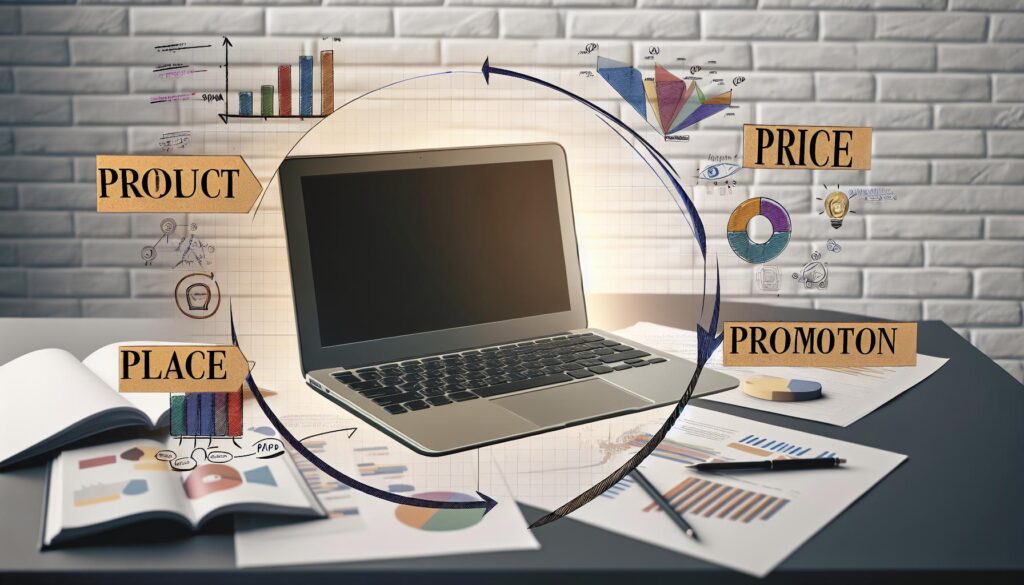
The marketing mix is a fundamental tool that encompasses essential strategies for commercial success. In this article, we will explore in detail the 4 Ps of marketing — Product, Price, Place, and Promotion — and how combining them effectively can transform your business and maximize results.
Understanding the Concept of the Marketing Mix
Marketing mix Marketing is a fundamental concept that refers to the set of coordinated strategies used to promote and market products and services effectively. Its classic definition is closely linked to the idea of the "4 Ps": Product, Price, Place (distribution), and Promotion, which together form the basic structure for planning marketing actions.
The term and structure of the marketing mix were introduced by Professor Jerome McCarthy in the 1960s, quickly becoming an indispensable reference for marketing professionals worldwide. McCarthy organized the variables that a professional could manipulate to efficiently reach their target audience, facilitating the understanding and practical application of marketing strategies in different business contexts.
Historically, the concept of the marketing mix represents an evolution in how companies relate to the market. Before its popularization, marketing actions lacked a clear structure, often relying on isolated and poorly coordinated initiatives. The marketing mix, therefore, brought an integrated perspective, proposing that various decisions – from product development to distribution and communication – should be planned jointly and aligned with market objectives.
Within this framework, each of the 4 Ps has its specific role, but only achieves effectiveness when considered in connection with the others. For example, a product innovation needs to be supported by an appropriate pricing strategy, efficient distribution methods that guarantee consumer access, and promotional actions capable of highlighting its benefits.
Furthermore, the marketing mix does not operate in isolation; its application must be based on a detailed analysis of the market environment. This includes understanding the economic conditions, competition, technological trends, and regulations that influence the dynamics of the sector in which the company operates. Rigorous market research is essential to capture consumer needs, desires, and expectations, allowing the mix to be adjusted to accurately meet these demands.
For example, a company that identifies, through market research, that its consumers seek sustainability can adapt its product mix by offering products with a lower environmental impact (Product), practicing a competitive price that values this characteristic (Price), distributing its products through channels that communicate this commitment (Place), and investing in promotional campaigns that highlight sustainability as a differentiator (Promotion).
Consumer behavior is another crucial component in formulating the marketing mix. By understanding the purchase decision process, the motivations, and the factors that influence consumer choice, it is possible to build more targeted strategies. Target audience segmentation, for example, allows the 4 Ps to be adapted to different profiles, increasing the effectiveness of actions.
In short, the marketing mix acts as an integrated and dynamic tool that guides the planning of commercial actions, based on the coordination between Product, Price, Place, and Promotion, calibrated from market analysis, research, and consumer behavior. Its historical impact and continued relevance make it a cornerstone for the success of marketing strategies today.
The 4 Ps of Marketing and their Functions
The marketing mix is composed of four fundamental elements known as the 4 Ps: Product, Price, Place (distribution), and Promotion. Each of these components plays a strategic role in creating value for the customer and gaining a competitive advantage for the company. Below, we describe in detail each of the 4 Ps, their main functions, and their impacts on both the customer experience and the overall performance of the business.
Product This refers to the good or service offered to the market to satisfy a consumer need or desire. It is the core of the offering, including its characteristics, quality, design, packaging, brand, warranties, and related services. Correctly defining the product is essential because it generates the perception of value and differentiation from the competition. Furthermore, the product must be developed in line with the expectations and behaviors of the target audience to ensure acceptance and customer loyalty.
Importance of the Product:
– Directly addresses customer needs;
– It creates differentiation in the market;
– It affects customer satisfaction and loyalty.
Main product functions:
– Define tangible and intangible attributes that influence customer choice;
– Adapting to constantly evolving needs;
– To support the brand's value proposition.
Table – Example of characteristics and applications for Product:
| Characteristic | Description | Applied Example |
|————————|——————————————————————|————————————-|
| Quality | Level of excellence that meets or exceeds expectations | Smartphone with advanced camera |
| Design | Aesthetics and functionality that attract and facilitate use | Ergonomic and sustainable packaging |
| Brand | Identity and reputation as perceived by the consumer | Brand recognized for trust |
| Added services | Warranties, technical assistance, after-sales support | 24-hour support and extended warranty |
Price This represents the monetary amount that the customer must pay to acquire the product or service. It is a critical variable because it has a direct impact on the perception of value, competitiveness, and profitability of the company. Price formation involves the analysis of costs, consumer behavior, competition, positioning strategies, and financial objectives. An appropriate price balances revenue maximization with accessibility and attractiveness to the public.
Importance of Price:
– It enhances or devalues the perception of the product;
– It influences purchasing decisions;
– It affects margins and financial sustainability.
Main functions of the Price:
– Establish a monetary value proposition that is consistent with the market;
– To allow differentiation through customer segmentation;
– Adapt to variations and economic conditions.
Table – Example of characteristics and applications for Price:
| Characteristic | Description | Applied Example |
|——————-|————————————————————|————————————|
| Strategy | Define whether it will be based on cost, value, or competition | Premium price for an exclusive product |
Elasticity | Consumer sensitivity to price variations | Seasonal discounts to stimulate sales
| Perception of value | How price communicates quality and status | High price to convey exclusivity |
| Adjustments | Promotions, discounts, installments | Sales with easy payment terms |
Place (Distribution) This refers to the set of channels and touchpoints used to get the product to the end consumer. It involves decisions about location, logistics, inventory, intermediaries, and geographic coverage. The efficiency of distribution is crucial for convenience, availability, and the customer experience at the time of purchase, directly impacting sales and the company's competitiveness.
Importance of the Square:
– Ensures accessibility and convenience for the consumer;
– Optimizes logistics and storage costs;
– It expands market reach.
Main functions of the Square:
– Select and manage appropriate distribution channels;
– Controlling flows and inventory levels for efficient demand;
– To facilitate fast delivery and product availability.
Table – Example of characteristics and applications for a Plaza:
| Characteristic | Description | Applied Example |
|———————|—————————————————————-|————————————|
Channels | Intermediary structure and points of sale | Online sales and physical stores |
Logistics | Transportation, warehousing and inventory management | Agile distribution center |
| Coverage | Geographic area served | National presence with franchises |
| Convenience | Easy access for the customer to the product | App with 24-hour delivery |
Promotion It encompasses all communication strategies and actions aimed at informing, persuading, and influencing the consumer to purchase the product. It includes advertising, personal selling, sales promotion, direct marketing, and public relations. Promotion is vital for building brand recognition, educating the market, stimulating demand, and strengthening the relationship with the consumer.
Importance of Promotion:
– Creates and reinforces the brand image;
– It motivates purchasing behavior;
– It facilitates the launch of new products and customer retention.
Main functions of the Promotion:
– To publicize the benefits and features of the product;
– To persuade and encourage immediate purchases;
– To promote customer loyalty and engagement.
Table – Example of features and applications for Promotion:
| Characteristic | Description | Applied Example |
|———————-|—————————————————————-|————————————|
Advertising | Paid messaging for wide dissemination | Social media and TV campaigns |
Sales promotions | Temporary incentives to stimulate purchases | Discount coupons and giveaways |
| Personal sales | Direct and personalized contact with the customer | Team of specialized salespeople |
| Public relations | Image management and communication with strategic audiences | Events and press relations |
The interaction between these four elements is what enables the construction of a coherent and competitive value proposition. For example, an innovative product (Product) with an affordable price (Price), widely available through convenient channels (Place), and an effective promotional campaign (Promotion) create a synergy that enhances the customer experience, generates satisfaction, and boosts sales. Similarly, adjustments to one of the Ps directly impact the others, requiring integrated management to maintain balance in the mix and achieve marketing and business objectives.
Understanding and operating each of the 4 Ps in a way that aligns with the consumer profile and the competitive environment is essential for sustainable success, as it contributes to differentiation, operational efficiency, and strengthening relationships with the market.
How to Build an Effective Marketing Mix Strategy
Develop a strategy for marketing mix A strategy aligned with business objectives requires a careful and structured approach, starting with in-depth market analysis and culminating in the refined adjustment of the 4 Ps — Product, Price, Place, and Promotion. Below, we present a step-by-step guide to conducting this process efficiently, using methods and tools that aid in data-driven decision-making.
1. Market Analysis
Before making any strategic decisions, it is essential to conduct a detailed analysis of the market in which the company operates. Use tools such as SWOT Analysis (Strengths, Weaknesses, Opportunities, and Threats) to understand the competitive positioning, and PESTEL Analysis (Political, Economic, Social, Technological, Environmental, and Legal) to identify external factors that may impact the business.
Furthermore, apply market research techniques such as online questionnaires, qualitative interviews, and secondary data analysis (industry reports, government surveys) to gain insights into consumer behavior, trends, and unmet demands. Digital tools like Google Analytics and Social Listening platforms are also valuable for understanding consumption patterns and real-time feedback.
2. Market Segmentation
With the data collected, the next step is to segment the market, separating groups of consumers with similar needs, desires, and behaviors. This segmentation can be done using demographic variables (age, gender, income), psychographic variables (lifestyles, values), geographic variables (location), and behavioral variables (loyalty, product usage).
Utilize quantitative methods, such as cluster analysis and segmentation based on machine learning algorithms, to find meaningful and actionable segments. Software applications like SPSS, R, or even tools integrated into CRM enable robust analysis that provides a solid foundation for subsequent choices.
3. Defining the Target Audience
After identifying segments, choose those that best align with the company's resources and strategic objectives. The target audience should be described in detail in terms of profile, purchasing preferences, preferred channels, and specific needs, creating personas that will serve as a guide for future decisions.
For this refinement, CRM (Customer Relationship Management) tools and internal databases make it possible to cross-reference information and predict behaviors, making the target audience more tangible and measurable.
4. Market Positioning
With the target audience defined, it's necessary to decide what the brand or product image will be in the minds of consumers, highlighting unique benefits and competitive advantages. The positioning should answer the question: "Why should the customer choose our offer instead of the competitor's?"“
Effective positioning strategies are based on detailed competitive analyses, using frameworks such as the Positioning Map or Value Matrix, which compare perceived attributes, price, and benefits. Internal workshops and focus group testing also help validate the hypotheses created.
5. Adjusting the 4 Ps Based on Data
Finally, we adjusted the marketing mix — the 4 Ps — in an integrated and data-driven way, to ensure that each element contributes to the positioning and achievement of the objectives.
- Product: Based on the preferences and needs of the target audience, adapt features, packaging, design, and associated services. Use rapid prototyping tools and A/B testing to evaluate improvements in product attributes.
- Price: Pricing should be competitive, but also reflect the value perceived by the customer and the costs involved. Methods such as price sensitivity analysis, conjoint analysis research, and competitor pricing analysis provide concrete insights. Financial management and BI software assist in constant monitoring for dynamic adjustments.
- Place (Distribution): Choose the channels that best reach your target audience and optimize logistics to ensure availability and convenience. Use channel management software and geolocation analytics to define points of sale, digital channels, or strategic partnerships that efficiently expand your reach.
- Promotion: Structure your promotional mix by considering the most effective communication channels to reach your target audience—from online advertising and content marketing to in-store promotions and events. Marketing automation tools (such as HubSpot, RD Station) and performance metrics (ROI, CAC, CPL) guide the planning, execution, and continuous optimization of campaigns.
In short, developing a marketing mix requires constant iteration between analysis and execution, always based on reliable data and aligned with business objectives. The combined use of analytical software, market research, and quantitative and qualitative methodologies strengthens the company's ability to adapt the mix to market changes and maximize value creation for the customer.
Challenges and Trends in the Marketing Mix in the Digital Age
Applying the marketing mix in the digital context faces complex challenges that demand constant and strategic adaptations, especially given the rapid evolution of consumer behavior. Digital transformation has driven the rise of omnichannel strategies, with consumers moving across multiple channels—physical, online, social media, and apps—in an integrated and simultaneous way, making it essential for companies to align their 4 Ps to offer a fluid and coherent journey across all touchpoints.
Digital consumer behavior is characterized by the search for personalized experiences, interactivity, and immediate responses. This means that simply offering a product or service has a reduced impact if it is not anchored in strategies that deliver relevant and rapid value. In this scenario, personalization emerges as one of the fundamental pillars of the modern marketing mix, made possible mainly by the collection and analysis of behavioral data in real time.
Automation, in turn, becomes indispensable for dealing with the complexity and volume of digital consumer interactions. Marketing automation tools, such as segmented emails, remarketing, and chatbots, allow not only the optimization of resources but also more efficient and personalized communication, adjusting promotions and offers according to each customer's profile and history. These technologies expand companies' responsiveness, maintaining a dynamic and scalable relationship.
Another key aspect is the strategic incorporation of content marketing within the mix, which has shifted from a complementary tool to a central element. Producing relevant, educational, and engaging content has become an effective way to build brand awareness, generate leads, and foster loyalty. By integrating content marketing with other mix variables—such as price, product, and place—it's possible to create ecosystems that influence the purchase decision throughout the entire consumer journey.
Data analysis, therefore, is the element that guides all these strategies, providing deep insights into customer behavior, campaign performance, and market trends. With advanced analytics and artificial intelligence techniques, companies can quickly adjust their marketing mix, identify emerging opportunities, and anticipate potential threats. Thus, the process ceases to be static and becomes a dynamic management approach driven by concrete results.
One example of a successful adaptation of the digital marketing mix is the company... Netflix, which extensively uses personalization and data analysis to recommend content tailored to each user, integrating its product model (personalized streaming), pricing (varied plans), and promotion (targeted campaigns across multiple channels). Another reference is Amazon, which combines process automation, omnichannel strategies, and content marketing on a global scale, ensuring that consumers have purchasing options, recommendations, and support across all devices and platforms.
For digital businesses looking to adapt their marketing mix, some strategies are essential:
- Investing in data collection and quality: To ensure that accurate and segmented information feeds into analytics and automation platforms, enabling more assertive decisions.
- Implement integrated channel systems: Avoiding silos between physical stores, e-commerce, social media, and customer service, creating a true omnichannel experience.
- Develop personalized and relevant content: that directly address the needs and pain points of the target audience, increasing engagement and interest.
- Using automation for lead segmentation and nurturing: Strengthening relationships, stimulating conversion, and reducing operational costs.
- Continuously monitor indicators and feedback: to quickly adjust prices, channels, promotions, and even product features according to market behavior.
These approaches allow the marketing mix to transcend its traditional application, becoming an adaptive and digitally consumer-centric framework capable of meeting the challenges of today's volatile market and stimulating sustainable growth.
Case Study and Practical Applications to Maximize Results
Marketing Mix It comes to life when applied strategically and in an integrated way, transforming theories into tangible results. To illustrate this practical application, let's consider the hypothetical case of... EcoVibe, a startup that launched a line of sustainable personal care products, focusing on conscious consumers who value environmental responsibility.
When it began operations, EcoVibe structured its marketing mix traditionally known as the 4Ps, but always adapting each element to its target audience and competitive market:
- Product: EcoVibe developed items with natural formulations, biodegradable packaging, and clear environmental certifications, highlighting quality and authenticity. It invested in design and visual communication to reinforce its sustainable identity.
- Price: The pricing strategy positioned the products as affordable premium items, taking into account the higher costs of environmentally friendly inputs, but seeking a balance so as not to alienate price-sensitive consumers.
- Place (Distribution): A combined omnichannel model was chosen, where online sales — via its own e-commerce platform and selected marketplaces — complemented distribution in physical stores specializing in natural products and local markets, reinforcing its presence in strategic locations.
- Promotion: The strategy focused on educational initiatives, content marketing, and niche influencers to create engagement and strengthen the sustainable message, in addition to targeted digital campaigns and local events that brought the brand and consumer closer together.
After the first 12 months, EcoVibe evaluated the results and implemented changes based on the data collected:
- He observed that online sales represented 65% of revenue, but the repurchase rate was higher among consumers who had contact with physical stores. Therefore, he expanded partnerships with local points of sale, investing in training for salespeople to convey the product's unique selling points.
- He discovered that occasional promotional prices generated sales spikes, but did not build customer loyalty; the solution was to adjust the promotional calendar to include educational themed campaigns, creating added value without sacrificing profit margin.
- Consumer feedback revealed interest in complementary product lines and refills, leading EcoVibe to expand its portfolio with affordable sustainable options and strengthen initiatives that highlight the circular economy.
For businesses seeking to implement or optimize their marketing mix, regardless of size, some practical tips emerge from this case study:
- Get to know your audience deeply: Segment based on real needs, values, and behaviors, using both qualitative and quantitative research.
- Be flexible in distribution: Experiment with different channels and seek a balance between digital and physical presence, according to the consumer profile.
- Relevant and consistent communication: Adapt the message and format to the medium and the moment, but maintain a clear and consistent positioning.
- Monitor key indicators frequently: Sales, satisfaction, engagement, and feedback help to adjust prices, promotions, and product mix.
- Invest in sustainable differentiation: Whether through product features or used as a marketing tool, a sustainable differentiator creates an emotional connection and perceived value.
Practical summary:
| Good Practices | Common Mistakes | Recommendations |
|---|---|---|
|
|
|
Conclusion
The marketing mix is essential for structuring and guiding the commercial strategies of any business, maximizing the value offered to the customer and ensuring competitiveness in the market. Understanding and correctly applying the 4 Ps allows for more accurate decisions and significant results. To enhance your strategy, contact Thigor Agency for specialized marketing support.


 Portuguese
  Italian
  English