
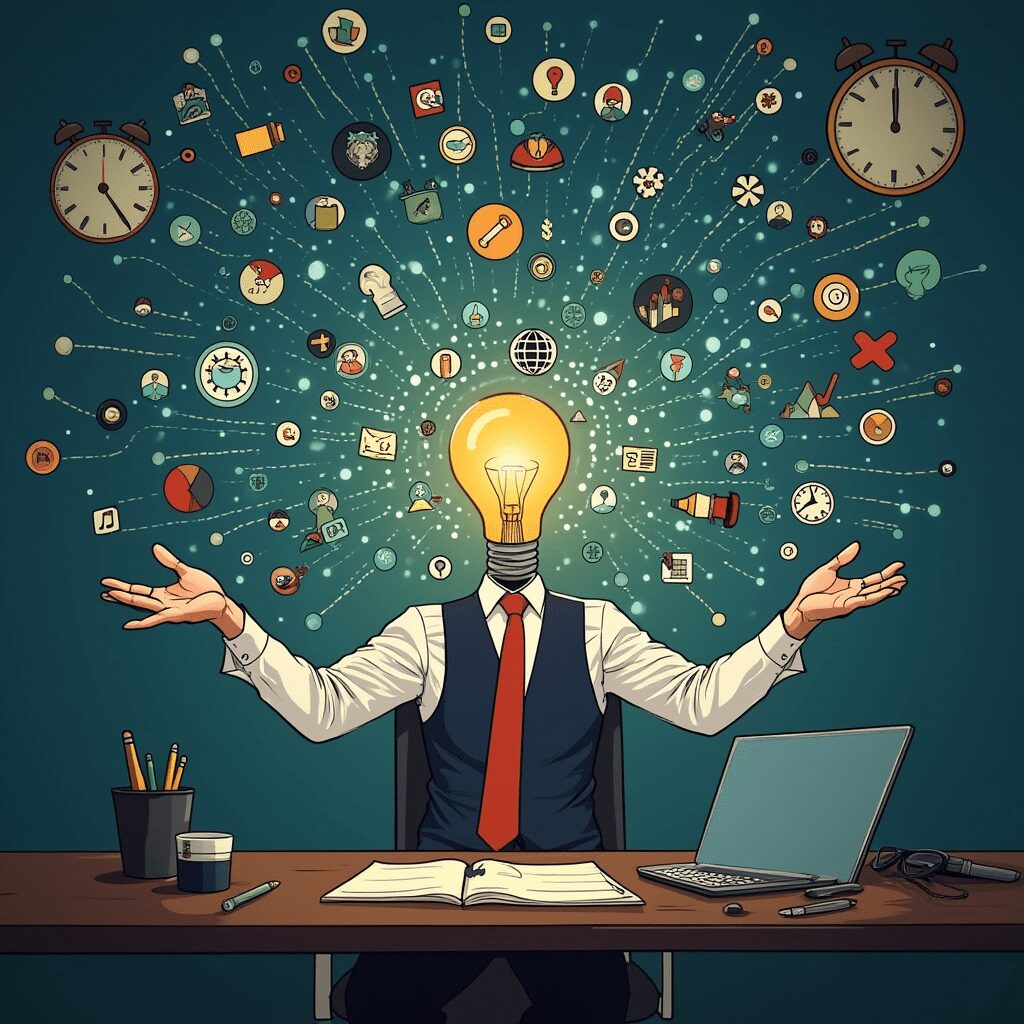
Marketing has transformed significantly over the decades, keeping pace with technological advancements and changes in consumer behavior. In this article, we will explore the evolution of this field, from its traditional origins to contemporary digital strategies, highlighting its main phases, techniques, and impact on the business world.
The Rise of Traditional Marketing and Its Foundations
Throughout the 20th century, traditional marketing consolidated itself as an essential discipline for the development and growth of companies, proving fundamental in understanding and influencing consumer behavior. During this period, marketing strategy was largely guided by the classic 4 Ps model — Product, Price, Place, and Promotion — elements that directed basic decisions regarding the offering and positioning of products in the market.
The **Product** involved the creation and development of goods and services that met consumer needs, including concerns about quality, design, and functionality. The **Price** was defined based on strategies that sought both competitiveness and perceived value; the balance between cost and benefit directly influenced the target audience's purchasing decision. The **Place**, or distribution, focused on points of sale and channels that ensured product accessibility for the end consumer, ranging from physical stores to intermediaries such as distributors. Finally, **Promotion** encompassed actions aimed at disseminating information and communicating with the public, and this is where advertising in traditional media found its greatest expression.
Traditional marketing techniques were deeply associated with the communication vehicles available at the time, such as radio, television, newspapers, and magazines. Each medium had its own characteristics that influenced how messages were constructed and disseminated. For example, radio prioritized reach and penetration in diverse geographic areas, reaching consumers even in rural and less urbanized environments. Television, in turn, added visual resources to communication, creating more impactful and emotional advertising campaigns, taking advantage of the power of image and sound. Newspapers and magazines allowed for detailed and segmented advertisements, useful for informing and persuading specific audiences through extensive texts and images.
It was during this period that market segmentation began to gain relevance, with the understanding that consumers were not a homogeneous group. Identifying distinct groups with specific habits, desires, and needs made it possible to develop more targeted and effective messages, maximizing advertising investments. This segmentation indicated a significant evolution: marketing ceased to be simply a set of mass actions and began to assume a more strategic character, oriented towards concrete results.
Below is a comparative table of the main tools of traditional marketing and the impacts perceived by consumers at that time:
Comparative Table of Traditional Marketing Tools
- Tool: Radio
FeaturesWide and immediate reach, auditory communication, ideal for brand reinforcement and promotions.
Impact on consumersIt created strong sound associations, allowed for easy memorization of jingles, and influenced decisions quickly. - Tool: Television
FeaturesAudiovisual communication, high persuasive power, massive reach, and time-of-day segmentation.
Impact on consumersIt encouraged desire through emotional imagery, increased brand and product recognition, and facilitated behavioral influence. - ToolNewspapers
FeaturesProviding detailed content, wide regional circulation, ideal for localized advertising.
Impact on consumersAllowing for more careful analysis, it inspired confidence through the formality of the publication, reaching more traditional audiences. - ToolMagazines
FeaturesEditorial segmentation, high-quality graphic material, greater message retention.
Impact on consumersAssociated with specific lifestyles, they influenced social and cultural groups, generating aspirational desire.
The combination of these tools with the strategic application of the 4 Ps and segmentation allowed companies to consolidate stronger bonds with their consumers and shape entire markets. Traditional marketing, therefore, served as the foundation for the development of increasingly sophisticated strategies, sustaining economic and commercial growth for much of the 20th century.
Transition to Direct and Data-Driven Marketing
With the advancement of technology and the increasing availability of information, marketing began to undergo a significant transformation from the second half of the 20th century, driving the transition from traditional marketing to direct marketing. This change was mainly marked by the more intensive and strategic use of data collection and the possibility of segmenting the target audience much more precisely than before.
While traditional marketing relied on broad and generalized communications aimed at large audiences through media such as television, radio, and newspapers, direct marketing emerged with the goal of establishing a more direct and individualized contact with the consumer. Through the creation and development of databases, companies began to store detailed information about the profiles and preferences of their clients and potential clients. These databases allowed not only the organization of qualified lists, but also analysis to identify specific segments, enabling personalized campaigns with a higher chance of conversion.
Among the tools that stood out in this new scenario are direct mail, telemarketing, and email marketing. Direct mail, previously limited to mass distribution of printed mailings, gained effectiveness when it began using segmented databases, choosing the audience based on demographic, behavioral, or purchase history criteria. Telemarketing, in turn, leveraged this information to make personalized approaches, increasing the chances of engaging with the consumer. Finally, email marketing emerged as a very agile and economical form of direct contact, enabling customized messages, A/B testing, and real-time performance analysis.
These innovations have enabled a shift in the relationship between companies and customers: instead of one-sided and generic communication, we now have a more personalized dialogue, focused on the needs and interests of each individual. This personalization not only increased the efficiency of campaigns but also strengthened customer loyalty, as communication came to be perceived as more relevant and less intrusive.
Below, we present a comparative table that highlights the advantages and disadvantages of traditional marketing in relation to direct marketing, illustrating how these strategies coexist and complement each other in different contexts.
| Traditional Marketing | Direct Marketing | |
|---|---|---|
| Reach | Widely widespread, it reaches large audiences through media such as TV, radio, and newspapers. | More segmented, focused on specific audiences based on detailed data. |
| Customization | Low volume, standardized messages for a broad audience. | High-quality technology allows for personalized approaches tailored to consumer preferences. |
| Interactivity | Limited, predominantly one-way communication. | Greater interaction, with the possibility of direct feedback and two-way communication. |
| Cost | Generally high, especially for advertising in large media outlets. | Relatively smaller, with a focus on efficiency and a more measurable return on investment. |
| Monitoring and Measurement | Difficulty in measuring individual impact and return in real time. | Ease of measuring results and adjusting campaigns using concrete data. |
| Customer Relationship | Further away, the communication becomes generic and lacks personalization. | Closer relationships, direct dialogue, and attention to the specific needs of the consumer. |
| Technological Dependence | Low usage, predominantly of physical and offline media. | High-level technology requires databases, analytics systems, and digital tools. |
This evolution of marketing does not mean abandoning traditional marketing, but rather expanding strategic possibilities. Direct marketing has brought a dimension of precision and personalization that has revolutionized the way companies relate to their consumers, making actions more efficient and relevant in an increasingly competitive and fragmented market.
The Revolutionary Impact of Digital Marketing
Since the 1990s, marketing has undergone a profound revolution with the emergence and growth of digital marketing, radically transforming how companies connect with their audience and promote their products and services. The popularization of the internet, followed by the expansion of digital devices such as personal computers, smartphones, and tablets, opened up a new universe of possibilities for communication and sales, establishing new rules, tools, and metrics that surpass the limits of traditional and direct marketing.
Initially, digital marketing focused on basic strategies, such as creating institutional websites and using email marketing, which quickly evolved into more sophisticated and integrated methods. Among the main tools that consolidated digital marketing, **SEO (Search Engine Optimization)** stands out, whose role is to increase the organic visibility of websites in search engines. SEO revolutionized the way to attract qualified visitors to digital platforms, integrating keyword analysis, strategic content production, and technical optimization, with measurable results, which favors more assertive decision-making.
In parallel, **content marketing** emerged, prioritizing the creation and distribution of relevant and valuable information for the audience, establishing a relationship based on trust and authority. This format went viral with the growth of blogs, videos, podcasts, and, more recently, interactive content, favoring engagement and loyalty, as well as strengthening SEO strategies.
Another significant evolution occurred with the rise of **social media**, which have become indispensable channels for brands to communicate directly with their consumers, recognize trends, and create communities around their values and products. Digital marketing on social media explores various formats such as posts, stories, live streams, targeted ads, and real-time interactions, allowing not only dissemination but also instant monitoring of brand perception.
Furthermore, the continued use of email marketing has adapted to the new digital context, becoming more segmented, personalized, and automated. Modern platforms enable intelligent mailings based on user behavior, such as shopping cart abandonment, birthdays, and the purchase journey, enhancing the effectiveness of customer relationships and increasing conversion rates.
In recent years, influencer marketing has emerged strongly, leveraging the credibility and reach of social media through personalities who directly impact consumer decisions. This strategy presents high potential for engagement and authenticity, especially when aligned with micro and nano influencers who have niche audiences, reinforcing relationship marketing and the personalization proposed by digital marketing.
The influence of the internet and digital devices has also enabled process automation, the use of **Big Data and artificial intelligence**, adding precision to segmentation and results measurement. These innovations expand the possibilities for personalization at scale, transform data into strategic insights, and integrate different channels, making marketing actions more effective, agile, and performance-oriented.
To better illustrate the differences and new capabilities offered by digital marketing compared to traditional marketing, the table below presents key comparisons:
| Aspect | Traditional Marketing | Digital Marketing |
|---|---|---|
| Measurement | Difficult and indirect, based on estimates and market research. | Immediate and precise, with specific metrics for clicks, impressions, conversions, and engagement. |
| Customization | Limited, generally broad demographic and geographic segmentation. | Advanced, based on behaviors, interests, purchase history, and real-time interaction. |
| Automation | Almost non-existent, manual actions and static campaigns. | Extensive automation for email marketing, lead management, remarketing, and automated customer service. |
| Interactivity | One-way, mass communication without instant feedback. | Two-way, allowing for immediate dialogue, engagement, and viral spread. |
| Reach | Limited by geography and traditional means of communication. | Global, with the possibility of hyper-localized segmentation or operation in specific niches. |
| Cost | Elevated and less flexible, with high investments in mass media. | More accessible and scalable, with budgets tailored to objectives and A/B testing. |
This transformation, driven by the democratization of digital access, has not only expanded the reach and effectiveness of campaigns, but has redefined the role of marketing as a dynamic, data-driven, and customer-centric tool, enabling strategies that continuously adapt to rapid changes in consumer behavior and the technological landscape.
Contemporary Marketing and Future Trends
Marketing has undergone profound transformations, driven by technological innovations and changes in consumer behavior, shaping not only the strategies adopted but also the very essence of communication between brands and audiences. One of the main drivers of this evolution is marketing based on advanced data, where Big Data stands out as an engine for more precise and effective decision-making. The massive, real-time analysis of large volumes of data allows for understanding complex behavioral patterns, segmenting audiences with very high precision, and predicting future demands, transforming campaigns into extremely relevant experiences focused on the individual needs of consumers.
Meanwhile, artificial intelligence (AI) is establishing itself as a crucial tool for innovation in relationship building and marketing automation. Advanced chatbots, recommendation algorithms, and dynamic content personalization are just some of the applications that are already profoundly impacting the customer journey. AI expands brands' ability to offer faster, more assertive, and humanized interactions, significantly improving the user experience and raising service standards to previously unimaginable levels.
Marketing automation, powered by these technologies, not only optimizes processes but also frees up resources so that teams can focus on strategy and value creation. Tools that automate everything from sending segmented emails to complex lead nurturing strategies ensure that the brand is present at the right time, with the right message, optimizing conversion and strengthening relationships.
Another essential aspect of current evolution is experiential marketing, which moves beyond mere communication to offer memorable and engaging experiences, whether in events, virtual or hybrid environments. The focus is on creating deep and lasting emotional connections with the audience, understanding that consumer loyalty today is built through interactions that transcend the product or service, valuing sensory experience, storytelling, and personalization.
Sustainable marketing is also gaining increasing space and relevance, supported by growing consumer awareness of social and environmental responsibility. Integrating ethical practices, promoting transparency, and demonstrating a real commitment to socio-environmental causes are actions that strengthen the brand image, while establishing a deep bond of trust with audiences who expect authenticity and alignment of values.
At the heart of this new reality is the customer experience, which becomes the main asset of companies. Advanced personalization, facilitated by the use of artificial intelligence and data analysis, makes it possible to build unique journeys for each consumer, making each interaction meaningful and efficient. This hyper-personalization requires a holistic understanding of the consumer, encompassing not only transactional data, but also contextual, psychographic, and behavioral data.
Emerging digital platforms, such as next-generation social networks, augmented and virtual reality spaces, and community-based ecosystems, broaden the horizon of possibilities for marketing, promoting new forms of engagement and interaction that go beyond traditional models. Brands that manage to integrate these environments with coherent strategies gain a competitive advantage, creating deeper and more unforgettable relationships.
The integration of omnichannel marketing, another indispensable trend, reflects the need to offer a fluid and consistent experience across multiple touchpoints, whether physical, digital, or hybrid. Synchronization between these channels, based on unified data, enables integrated communication that respects consumer preferences and behavior, avoiding fragmentation and maximizing the impact of marketing actions.
Finally, social transformations, such as the growing protagonism of consumers, the appreciation of diversity and inclusion, coupled with rapid technological innovations, challenge marketing to continually reinvent itself. The future of marketing lies in the convergence of technology, ethics, and creativity, where the ability to adapt and a deep understanding of the social and cultural context will be crucial for brand success. This evolution demands an integrated and multidisciplinary strategic vision, capable of anticipating trends and building truly meaningful relationships in a constantly changing world.
Conclusion
Over time, marketing has undergone profound transformations, evolving from traditional to digital and beyond, while adapting to market and consumer changes. Understanding this evolution is essential for developing effective and innovative strategies. To boost your business with a specialized agency, contact Thigor Agency at [website address]. https://thigoragency.com/contratar-agencia-de-publicidade/.


 Portuguese
  Italian
  English