
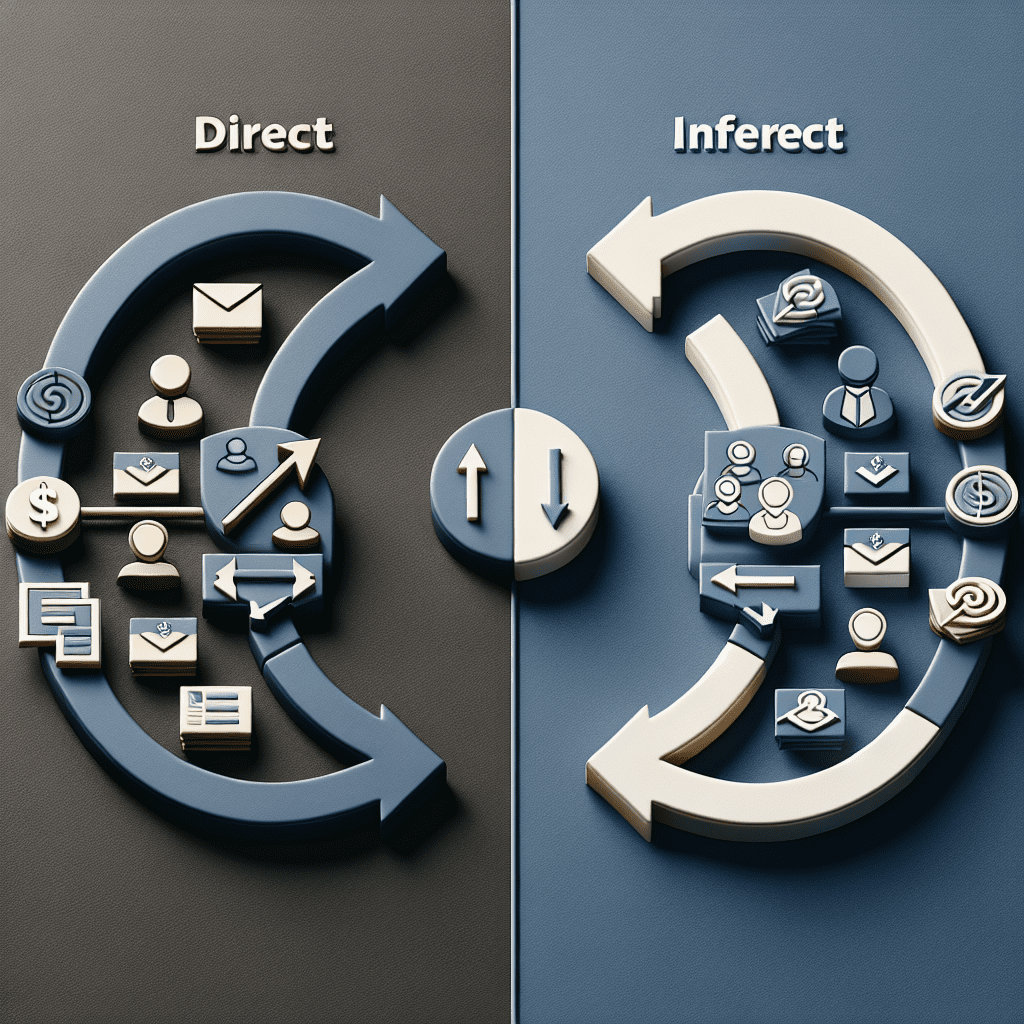
Direct marketing involves personalized communication and offers targeted directly at the consumer, while indirect marketing focuses on building brand recognition and value in a broader and more subtle way, without a direct sales approach.
What is Direct Marketing?
Direct marketing consists of strategies and actions aimed at reaching a specific target audience in a personalized way. It deals with communications that have the clear objective of generating an immediate response – whether it's a purchase, a registration, or any other measurable conversion. The most common channels for direct marketing include email marketing, text messaging, direct mail, telemarketing, and targeted social media ads. One of the main characteristics of direct marketing is the ability to accurately measure the return on investment of campaigns, since audience interaction is tracked and quantified.
What is Indirect Marketing?
Indirect marketing, on the other hand, operates more subtly, seeking to influence the audience through strategies that involve a longer maturation period and a less invasive approach. In this case, although the audience is reached by the brand's actions, there is no immediate call to action for a sale or conversion. The focus is on building and strengthening the brand's image, authority, and relationship with its audience. Typical examples of indirect marketing include content marketing, event sponsorship, product placement in media, as well as public relations and branding actions.
Key Characteristics of Direct Marketing
Direct marketing stands out for its high rate of personalization and campaign segmentation. Messages are sent to qualified contact lists based on interests, purchase history, and other relevant data. Furthermore, audience feedback is immediate and easily analyzed, allowing for quick adjustments to strategies. It is widely used when the goal is to obtain fast results and monitor the performance of each action in detail.
Main Characteristics of Indirect Marketing
In indirect marketing, the impact of actions is generally perceived in the medium to long term. It is the ideal approach for companies that want to build brand value, increase recognition, and engage the public organically. Communication is less invasive, prioritizing the company's relationship and reputation. Through relevant content, solutions, and a positive presence, indirect marketing creates emotional connections, making the company a reference in its segment.
When to Use Each Type of Marketing?
The choice between direct and indirect marketing depends on your business objectives and needs. If the intention is to generate quick responses and conversions, direct marketing is ideal. It allows for promotional campaigns, product launches, and limited-time offers. Indirect marketing, on the other hand, is recommended for those who want to consolidate their brand, increase public trust, and ensure presence at future purchase decision points. Investing in both is a smart strategy, as each contributes differently to the success and sustainable growth of the company.
Conclusion: The Importance of an Integrated Strategy
Understanding the difference between direct and indirect marketing is essential for developing an effective communication plan. While direct marketing seeks immediate and measurable results, indirect marketing builds brand value in the long term. Integrating both strategies enhances the company's market performance, strengthening relationships with consumers and increasing business opportunities. Evaluate your goals and use the best of both worlds to achieve significant results.



 Portuguese
  Italian
  English