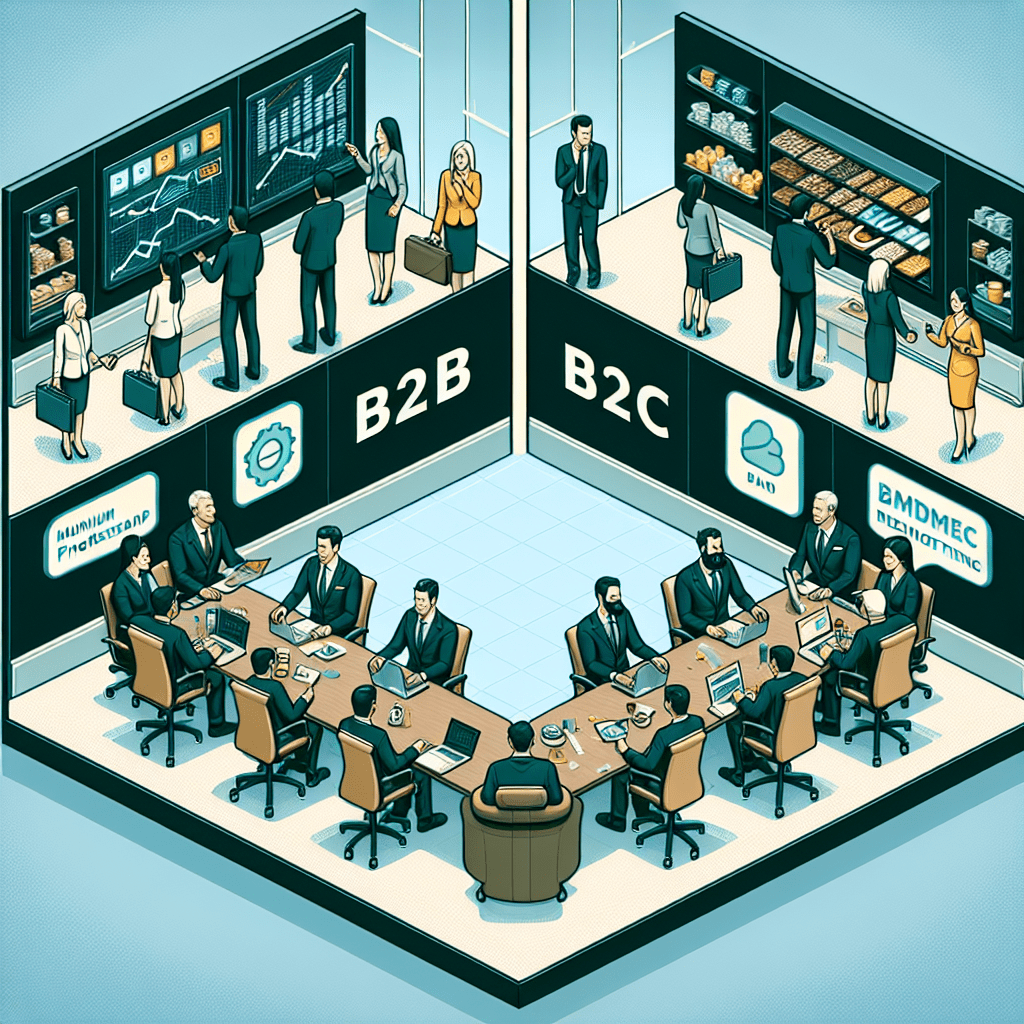

Mix Modeling (MMM) is an analytical methodology that allows measuring the impact of marketing actions on sales. Through the use of historical data and statistical techniques, MMM helps companies optimize their investments in advertising and promotions, improving efficiency and return on investment.
Fundamental Concepts of Marketing Mix and Marketing Mix Modeling
Marketing Mix is a fundamental concept in the field of marketing that refers to the set of tactical tools that a company uses to achieve its market objectives effectively. Originally, The marketing mix was structured into four classic elements, known as the 4 Ps: Product, Price, Square (distribution) and Promotion. These components were consolidated by E. Jerome McCarthy in the 1960s, a step that systematized the way companies think about their marketing strategies. Before that, the concept began to be outlined by Neil Borden in the 1950s, who coined the idea of “marketing mix” as a set of controllable variables that organizations can manipulate to influence market response.
THE Product involves the characteristics, design, quality and benefits of this offer; the Price refers to the monetary value established for the product or service, which must reflect its perception of value by the consumer; the Square represents the channels and points of sale through which the product reaches the end customer; finally, the Promotion comprises the communication and dissemination actions used to inform, persuade and remind consumers.
With the advancement of markets and the diversification of services, the marketing mix model was expanded to include 7 Ps, adding three more essential elements, especially for the services sector. They are: People, which addresses the role of employees in delivering the service and their interaction with the customer; Processes, which examines the procedures and flows that guarantee the quality and consistency of the offer; and Physical evidence (or physical evidence), which relate to the tangible environment where the interaction takes place and any physical sign that helps the consumer perceive the service.
| Marketing Mix 4 Ps | Marketing Mix 7 Ps |
|---|---|
| Product | Product |
| Price | Price |
| Square | Square |
| Promotion | Promotion |
| People | |
| Processes | |
| Physical evidence |
O Marketing Mix Modeling (MMM) is a statistical and analytical technique that uses historical data to quantify the individual contribution of each element of the marketing mix — traditionally the 4 Ps, but also applicable to the 7 Ps in specific contexts — on sales performance and other key marketing indicators. Through time series analysis, multiple regressions and other quantitative methodologies, MMM seeks to identify how different activities and variables impact commercial results, controlling the influence of external factors, such as seasonality, trends and market events.
The main objective of MMM is to provide managers with robust insights to optimize marketing investment, allowing them to allocate resources more efficiently and maximize return on investment (ROI). Furthermore, the model is a valuable tool for sales forecasting, as it helps to project the expected results of different operating scenarios, supporting strategic and tactical decisions.
| Marketing Data | Sales | Purpose of Analysis |
|---|---|---|
| Investment in Advertising | Monthly Sales Volume | Quantify the impact of the promotion on sales |
| Prices charged | Revenue | Assess price sensitivity and demand elasticity |
| Distribution and Coverage | Market Penetration | Understand the effect of the square on expanding reach |
To facilitate understanding, consider a simple example: a beverage company that invests in different promotional channels (TV, social networks, points of sale) and changes its pricing policy during seasonal promotions. Using MMM, it is possible to analyze, based on historical data on these investments and variations, which channel generated the highest return on sales and in which price range demand was most sensitive. This way, the company can direct its efforts and budget towards the most effective actions, avoiding waste and increasing marketing efficiency.
Another example, applied to a health services clinic, may involve analyzing the effects of training and qualification of professionals (People), improvement in care processes and the physical environment. In this context of 7 Ps, MMM is also able to measure how these variables impact the volume of consultations and patient satisfaction, showing the applicability of the model in different sectors and types of business.
In this way, Marketing Mix Modeling presents itself as an essential tool for companies that wish to base their strategies on quantitative evidence, navigating competitive and dynamic environments with decisions made with more analytical support and a focus on concrete results.
How Marketing Mix Modeling Works in Practice
Marketing Mix Modeling (MMM) works in practice as a statistical methodology that mainly uses multiple regression techniques to analyze the impact of marketing investments on sales results over time. The basis of this analysis is the crossing of historical data from different sources — such as media spending, prices charged, distribution, promotions and external variables such as seasonality and economic factors — to quantify the individual and joint contribution of each element of the marketing mix.
Multiple regression, applied in MMM, allows the relationship between the explanatory variables (marketing mix components and other control variables) and the dependent variable (normally sales or revenue) to be modeled. Unlike simple analyses, MMM addresses the complexities of temporal data and interactions between variables, adjusting coefficients as the data evolves. This technique helps to identify not only the immediate direct impact, but also delayed effects, known as *carry-over*.
*Carry-over* represents the residual effect that previous campaigns or marketing actions have on sales in subsequent periods. For example, an intense TV advertising campaign may generate an increase in sales that lasts for weeks after it ends, due to increased awareness or a change in consumer behavior. MMM incorporates this effect by modeling the accumulated impact over time, often through lagged variables or a decreasing function over time, simulating the gradual decrease in impact.
Another critical phenomenon well considered in MMM is diminishing returns, also called *law of diminishing returns*. This characteristic indicates that, despite increasing investment in a certain marketing lever, the incremental gain in sales tends to decrease after a certain point, due to saturation of the target audience or physical/regulatory limits of the action. It’s
| Indicator | Description |
|---|---|
| Effectiveness | Measure of the real impact of the marketing action on total sales, highlighting the incremental effect obtained. |
| Efficiency | Relationship between the impact generated and the cost of the investment, indicating the cost-benefit of the action. |
| Return on Investment (ROI) | Financial quantification of the return obtained in relation to the amount invested in marketing actions. |
| Carry-over | Dimension of the residual impact over time, demonstrating the persistence of the action beyond the active period. |
| Non-Linear Impact | Indication of the presence of saturation effects and investment response limits. |
| Interaction | Assessment of synergies or antagonisms between different instruments in the mix. |
| Halo and Cannibalization | Measurement of cross-influences between products and lines in the company’s portfolio. |
The data collection and integration process is one of the fundamental pillars for the quality of the MMM. This stage involves consolidating operational sales data, records of media investments, promotional actions, prices charged, coverage and distribution, in addition to economic and demographic data that influence consumer behavior. Integration must ensure adequate temporal alignment, consistency and granularity — typically at a weekly or monthly level — so that the model can capture subtle and rapid market variations.
A recurring challenge at this stage is the heterogeneity of data sources, which can vary in format, coverage and quality. For example, digital data from online campaigns may be separate from traditional offline media data, requiring robust extraction, cleaning, transformation and validation processes. Furthermore, the absence or delay in updating the databases compromises the reliability of the results. Therefore, investments in data governance, automation of ETL (extract, transform and load) processes and consolidation on single platforms are critical to the success of MMM.
Another complex point is the precise measurement of variables that represent promotional activities or prices, which are often interfered by external factors such as competition, regulatory changes or market trends, requiring the inclusion of control variables in the model to isolate the specific effect of the company’s marketing. Furthermore, the need to store long time series may be impractical for smaller companies, limiting the depth of modeling.
Thus, Marketing Mix Modeling, through the rigorous application of statistical techniques aligned with careful data management, allows organizations a deep and quantitative understanding of the contribution of each element of the marketing mix, highlighting the dynamic and interrelated effects that guide strategic decisions.
Benefits and Applications of Marketing Mix Modeling for Marketing Strategies
Marketing Mix Modeling (MMM) brings significant benefits to organizations by providing a clear and quantitative view of the impact of each component of the marketing mix, enabling a much more accurate budget allocation. By understanding which channels and actions generate the greatest return, companies can target their investments in an optimized way, reducing waste and increasing campaign efficiency. For example, a retailer may reallocate resources between traditional and digital media, based on data that indicates the relative effectiveness of these media on its sales.
Furthermore, MMM contributes to improving the segmentation of marketing actions, as it analyzes consumer behavior in relation to different stimuli and channels, helping to personalize strategies for specific target audiences. This level of detail supports more assertive decisions, such as choosing the best product mix for a given region or customer profile, increasing conversion rates and loyalty.
In practice, the use of Marketing Mix Modeling is especially valuable when optimizing advertising campaigns. Through modeling, it is possible to identify the campaigns that had the greatest impact on sales and adjust future investment based on this learning. Likewise, in-depth analysis of promotions allows us to assess their real contribution to sales performance, differentiating the temporary effect of the promotion from the sustainable growth of the brand.
Another crucial application is sales forecasting, using the history learned by the model to estimate performance under different market conditions and marketing strategies. This qualifies inventory planning and management, prevents excesses or shortages, and enables quick adjustments in the face of changes in the competitive environment.
The adjustment of the product mix, guided by MMM, proves to be effective in identifying which products generate the greatest return in combination with specific campaigns.
Challenges and Future of Marketing Mix Modeling in the Digital Era
The implementation of Marketing Mix Modeling (MMM) faces significant challenges that directly impact the quality and effectiveness of the results obtained. One of the main obstacles is the need for accurate, reliable and integrated data, which brings together information from multiple sources, such as sales, media investments, promotions, market indicators and consumer behavior. The absence of a robust and harmonized database can generate biases and inaccuracies, compromising the model’s ability to reflect reality and offer valuable insights. Furthermore, the intrinsic complexity of the MMM analytical process requires advanced knowledge in statistics, econometrics and data science, which demands specialized and multidisciplinary teams to develop and maintain the models.
Another relevant challenge is the high cost of developing and updating models, which involves investment in technology, qualified labor and the infrastructure necessary for storing and processing large volumes of data. This cost can be a barrier especially for smaller companies, making it difficult to democratize the use of MMM in the market.
With the advancement of big data, artificial intelligence (AI) and machine learning, Marketing Mix Modeling has undergone a significant evolution. These technologies make it possible to process massive volumes of data in an automated way, identifying complex patterns and non-linear relationships between variables that traditional models cannot capture. The integration of advanced algorithms enhances predictive capacity and increases the granularity of analysis, enabling assessments at regional levels, specific categories and even more refined audience segmentations. Furthermore, the use of AI techniques contributes to the automation of modeling processes, accelerating the achievement of results and reducing human errors.
Another transformation Marketing Mix Modeling points to continuous transformation, in which technology will play an even more central role. MMM is expected to become more dynamic, integrating hybrid models that combine different data sources, including sensor data, IoT and behavioral information captured by digital platforms. The trend is to expand the use of machine learning not only for optimization, but also to detect complex causalities and adjust models in real time, generating instant recommendations and ultra-personalized strategies. This evolution will allow MMM to move beyond the role of a traditional analytical model to become a fundamental predictive and prescriptive platform for data-driven marketing.
Additionally, growing concerns about data privacy and regulations will drive the adoption of advanced anonymization and protection techniques, ensuring compliance without losing the richness of analytics. As a result, Marketing Mix Modeling will continue to be an indispensable tool for organizations seeking competitiveness, helping to understand more and more precisely the impact of marketing actions, optimizing investments and supporting strategic decisions in an increasingly complex and dynamic market environment.
Conclusion
Marketing Mix Modeling presents itself as an indispensable tool for companies that want to maximize the return on their marketing investments, offering deep insights into the impact of each variable in the mix. Through the intelligent use of data and statistical analysis, organizations can make more assertive decisions, optimize their strategies and stand out in the current competitive market. To transform your marketing strategy and achieve significant results, contact Thigor Agency and discover how we can help you optimize your advertising investment.